Accommodation on the Everest Base Camp Trek
Your Hotel in Kathmandu
We book our guests into a solid, comfortable hotel on a twin-share basis. It's not luxury. But honestly, it does everything you need it to do. Clean attached bathroom, decent bedding, and all the standard things you'd expect from a good mid-range stay. Nothing to complain about. These hotels sit right inside Thamel.
If you've never been, think of Thamel as Kathmandu's main tourist neighborhood, basically a maze of restaurants, cafes, souvenir shops, and gear stores all packed together in one area. You can grab a last-minute jacket, find a great bowl of noodles, or just wander the streets for an hour. It's a good place to settle in before the trek begins.
We can arrange 4 or 5-star hotel accommodations in Kathmandu subject to additional costs.
Breakfast is included every morning. Sometimes it's a buffet spread, sometimes you order from a menu. Either way, you're starting the day properly fed. And if you want something a step above our standard arrangement, just let us know. We can sort a better hotel option for an added cost. No fuss at all.
What Teahouses Are Actually Like in EBC Trail
So a teahouse is basically a small family-run guesthouse sitting along the mountain trail. It gives you a bed, a hot meal, and a roof over your head. Simple as that. From what I've seen, the part most trekkers don't expect to love is the dining area at night.
You're sitting at a long communal table with other hikers, all of you tired, all of you having done the same steep climb that day, and the conversation just flows. Honestly, it ends up being one of the best parts of the whole experience.
The rooms in the Everest region themselves are a different story. Basic is the right word. Two beds, some blankets, thin walls.
Bathrooms are shared down the hall, and the toilet might be Western-style or squat depending on which teahouse you land in. Cold showers are standard. Some teahouses offer hot water, but you'll pay extra for that separately.
Bring your own sleeping bag. I can't say this enough. The blankets work fine at lower altitudes, but once you're climbing higher, the temperature at night drops sharply and a warm sleeping bag stops being optional.
Also, there are no single rooms during peak season. Sharing a room is just how it works up there, and most people settle into it within a day or two. No heating in the sleeping areas either. The warmth stays in the dining hall, usually from a small stove in the corner. So you layer up before bed, get into your sleeping bag, and that's how you do it.
Power and Charging Your Devices
Most teahouses now run on solar power, which is honestly impressive given how remote these spots are. Lights work, and you can charge your phone or camera. But you pay for it. Charging costs typically run around $3 to $5 per device, and that number increases with altitude. Carry a power bank. A small portable solar charger works too if you have one. It keeps you independent and saves money over the full trek.
Food and Drinking Water
Teahouse menus are more varied than most people expect. Dal bhat, fried rice, noodle soup, eggs, pasta, sometimes even apple pie. It's simple mountain food, but after a long trek day, it tastes amazing. For water, most teahouses provide boiled water for a small charge. It's better for the environment than plastic bottles. Still, carrying purification tablets or a LifeStraw is a smart backup. Vegan, Vegetarian, and gluten-free meals are all available on request.
Hot Showers: Yes, But You're Paying for Them
Hot showers are available, but they cost money. Gas has to be carried up the mountains, so expect to pay around $3 to $5 per shower depending on altitude. Most trekkers end up showering less than planned because of the cold. It’s normal, and you quickly adjust.
Luxury Lodges: A Real Option If You Want More Comfort
At lower stops like Namche Bazaar, Phakding, and Lukla, you’ll find upgraded lodges with attached bathrooms, better beds, and even electric heating. Not luxury by international standards, but much more comfortable than basic teahouses. A good option if you want the experience without fully roughing it. We can arrange these amenities on request. We have even created a special package of the Luxury Everest Base Camp Trek package.
Practical Notes Worth Keeping in Mind
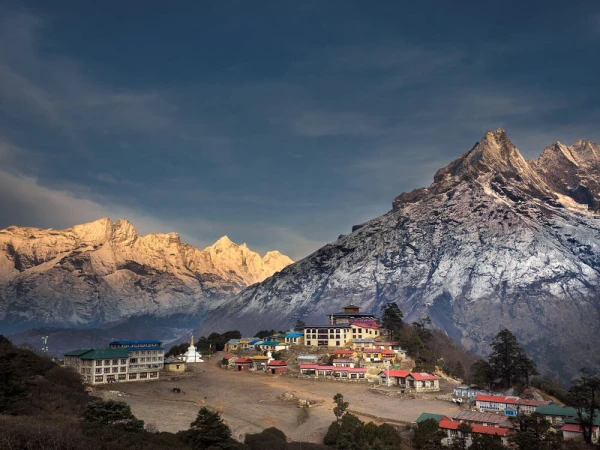
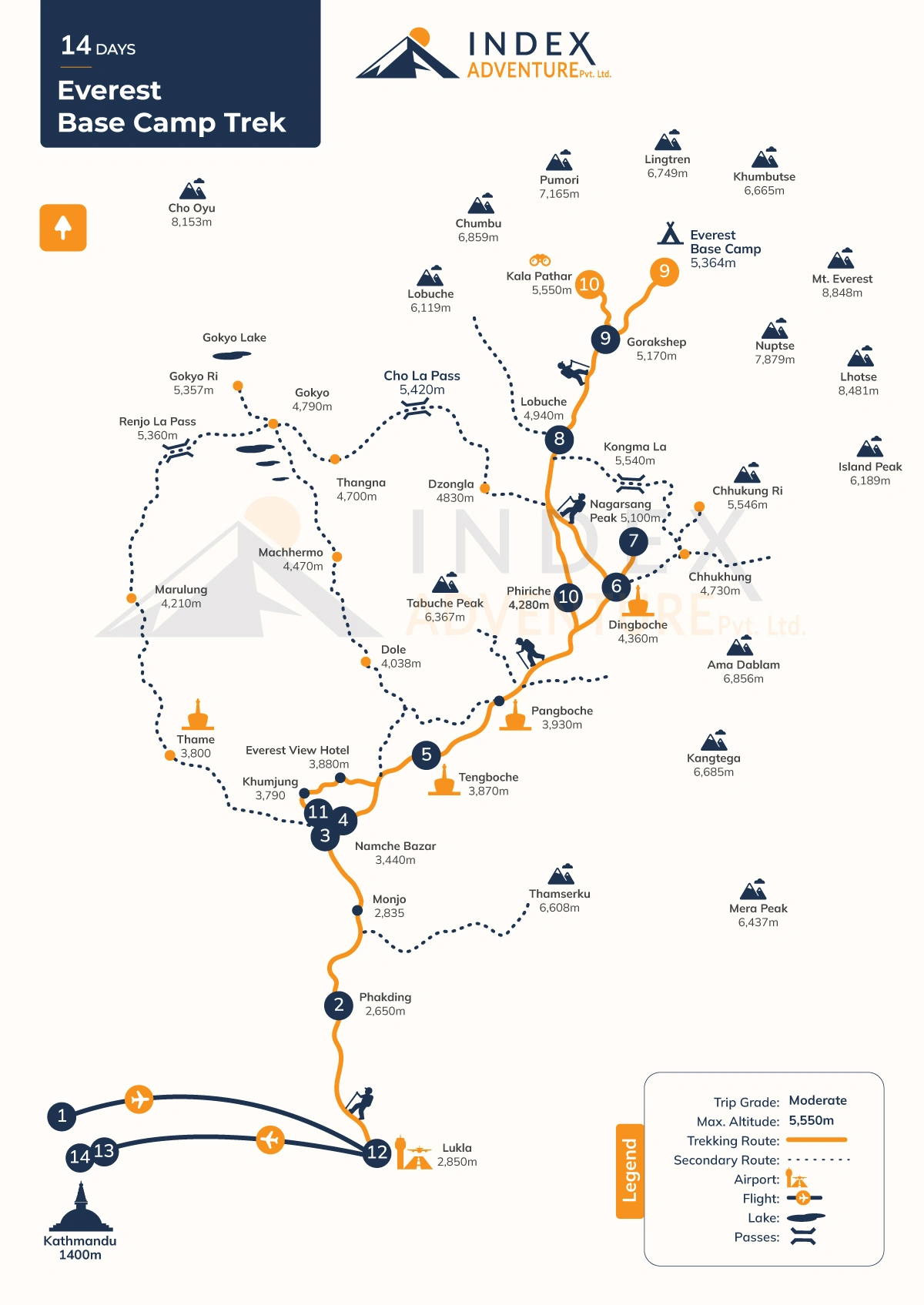
Accommodation is usually twin-sharing. Private rooms may be available at extra cost, but in peak seasons (March–May and September–November), availability is limited. Main stops include Lukla, Phakding, Namche Bazaar, Tengboche, Dingboche, Lobuche, and Gorak Shep. As you go higher, facilities become more basic. That simplicity is part of the experience. You're in the mountains, and it starts to feel right.
Arrival and Visa Requirements for the Everest Base Camp Trek
Getting to Nepal is honestly a lot smoother than most first-timers expect. And the visa process, while it sounds intimidating on paper, is pretty manageable once you know what to do.
Getting to Your Hotel from the Airport
When you land at Tribhuvan International Airport in Kathmandu, you won't be left figuring things out on your own. An Index Adventure representative will be waiting for you right in the arrivals area, holding up our company sign so you can spot them without any confusion.
They'll take care of your bags, sort out your transfer, and get you into a private vehicle heading straight to your hotel in Thamel. No haggling with taxi drivers, no trying to read unfamiliar signs after a long flight. You just follow our team and you're good.
Getting Your Nepal Visa
So here's the thing about the Nepal visa. You don't need to sort it out before you leave home, unless you really want to. Most nationalities can get a visa on arrival right at Tribhuvan International Airport, and the whole process typically takes under an hour. That's shorter than a lot of airport queues, to be fair.
You have a couple of options for how you handle it. You can fill out the tourist visa form online before you fly, which gives you a barcode receipt to bring with you. Or you can just use the self-service machines at the airport when you arrive. Either way, once you have your receipt, you head to the immigration desk with your passport, your arrival card, your payment receipt, and your form receipt. Hand everything to an immigration officer and that's basically it.
The visa fee can be paid in Nepalese Rupees, US dollars, or a few other accepted currencies. So it's worth having some USD cash on you just in case.
If you'd prefer to skip the airport queue entirely, you can also apply at the Nepal Embassy in your home country before you travel. It takes a bit more planning upfront, but it does mean you walk straight through immigration when you land. During peak trekking season, that's not a small thing.
Nepal Visa Fees for 2026
The costs are pretty straightforward. A 15-day visa runs $30, a 30-day visa is $50, and if you're planning a longer stay, a 90-day visa costs $125. All payable in cash USD.
For documents, you'll need a passport valid for at least six months, a couple of passport-size photos, and your cash. That's it.
A Few Things Worth Knowing
If you're from a SAARC country, including India, you either don't need a visa at all or you can get one for free. So check your nationality before you worry about any of this.
And if you're traveling between March and May or September and November, those are the busiest periods on the trekking calendar. We'd genuinely recommend filling out the online immigration form before you fly during those months. The airport gets crowded, the queues get longer, and having your barcode ready makes the whole thing move faster. It's a small step that saves a real headache.
Also, the Nepal visa is a multiple-entry visa. You can enter and exit the country more than once, and you're allowed up to 150 days in Nepal within a single year. So if you're planning to combine your Everest Base Camp Trek with other travel in the region, you've got flexibility built right in.
Food and Meals on the Everest Base Camp Trek
One thing that surprises most trekkers is just how much variety the food actually has up there. You're in the middle of the Himalayas, days from the nearest city, and somehow there's pizza on the menu. It's not always great pizza, to be fair, but it exists. And that alone says something about how well these teahouses are set up to feed you.
What's Actually on the Menu
Breakfast tends to be the most comforting meal of the day. You're looking at porridge, eggs done different ways, Tibetan bread, toast, French toast, pancakes, muesli, and chapati. Most of it comes with butter and jam on the side, and you can always get a hot cup of tea or coffee to go with it. Honestly, after a cold night in a mountain teahouse, a warm bowl of porridge hits differently than it ever does at home.
Lunch and dinner open up a lot more. Dal bhat is the standout, and I'd argue it's the best thing you can eat on this trek. It's a combination of steamed rice, lentil soup, vegetable curry, spinach, pickles, and gundruk, and most teahouses give you unlimited refills. So you eat until you're full, which matters a lot when you're burning through energy on steep trails all day.
Beyond dal bhat, you've got momos, which are Tibetan dumplings either steamed or fried, thukpa which is a thick noodle soup, chowmein, fried rice, pasta, spaghetti with tomato sauce and cheese, garlic soup, potato dishes in basically every form imaginable, and yes, pizza. The menus at lower stops like Namche Bazaar and Lukla are genuinely impressive. Namche even has bakeries with fresh baked goods and a couple of pub-style spots if you want to wind down properly after a long day.
Index Adventure includes three meals a day as part of your trek package. Breakfast, lunch, and dinner, plus tea or coffee with each sitting. You eat at whichever teahouse you're staying in that night, and the guide and porters usually order dal bhat because they know what fuels them best. Take a cue from them.
One Important Note About Meat
Once you climb above 3,000 meters, basically past Namche Bazaar, skip the meat. This isn't just a suggestion. Most teahouses at higher altitudes don't have refrigerators, which means meat gets transported without proper cold storage. That's a food safety problem waiting to happen, and the last thing you want at altitude is a stomach issue. Stick to vegetarian options up high and you'll be fine. Dal bhat, eggs, soup, noodles. All of it keeps you fuelled without the risk.
Dietary Needs
Vegetarian and vegan trekkers are well covered on this route. Rice, vegetables, pasta, and potatoes show up on almost every menu. Gluten-free options are also available at most stops. Just let Index Adventure know your dietary needs before the trek starts and we'll make sure your preferences are flagged with the teahouses along the way.
Snacks and Hydration
Pack your own snacks. Energy bars, nuts, dried fruit, chocolate. You know, the kind of stuff that fits in a jacket pocket and gives you a quick boost between meals. The trail doesn't always have a convenient stop right when your energy dips.
For water, drink a lot of it. Index Adventure recommends at least 3 to 4 liters per day, and mixing in ginger tea or hot lemon throughout the day helps with acclimatization more than most people realize. Garlic soup is another one worth ordering regularly. It sounds odd as a recommendation, but garlic is genuinely good for circulation at altitude and a lot of trekkers swear by it.
Stick to purified or boiled water only. Most teahouses provide boiled water for a small fee, which is the better option anyway compared to buying plastic bottles at every stop.
A Practical Note on Where to Eat
If you have any choice in the matter, eat at the busier teahouses. Higher turnover means fresher ingredients and food that's been cooked more recently. It's a small thing, but it makes a difference when you're spending nearly two weeks on the trail.
Your daily food budget outside of what's included in the package typically runs somewhere between $25 and $40 USD depending on what you order and how high up you are. Prices go up as altitude goes up. That's just the reality of getting supplies to these places, and it's worth factoring into what you carry.
Best Time to Trek to Everest Base Camp
Honestly, most people will tell you spring and autumn, and they're not wrong. But I think it's worth actually understanding what each season gives you and takes away from you, because the right time to go depends a lot on what kind of trekker you are.
Spring Season: March to May
Spring is one of the most popular windows for the EBC trek, and you'll feel that the moment you hit the trail. April especially sits in a sweet spot. Daytime temperatures at lower altitudes run between 10 and 20 degrees Celsius, which is comfortable without being hot. Nights drop to around minus 5 to 5 degrees, so it gets cold, but nothing unmanageable with the right layers.
The trail looks genuinely beautiful in spring. Rhododendrons bloom all along the lower sections, the air smells fresh, and the mountain views in the morning are the kind that make you stop walking just to stare. And if you're into mountaineering culture, this is when expedition teams are gearing up to attempt Everest itself. There's an energy at Base Camp during spring that you just don't get any other time of year.
The downside? It's busy. Lodges fill up, trails get crowded, and some sections feel more like a queue than a wilderness walk. But to be fair, if you book ahead and travel with Index Adventure, that's manageable.
Autumn Season: September to November
Autumn is the other peak window, and a lot of experienced trekkers actually prefer it. The monsoon has just cleared out, so the air is washed clean and the mountain views are sharper and more dramatic than any other time of year. October is basically the gold standard for visibility on this trek.
Temperatures run from around 12 to 22 degrees during the day, though the nights get colder than spring, dropping as low as minus 10 degrees at higher elevations. So pack accordingly.
What makes autumn special beyond the views is the cultural layer sitting underneath it all. Dashain and Tihar, two of Nepal's biggest festivals, fall during this season. If your timing lines up, you get to experience the trek and a side of Nepali culture that most people completely miss.
It's busy too, similar to spring. October especially draws a lot of trekkers. Pre-booking is not optional during this window. Index Adventure recommends locking in your lodges well in advance, especially at the popular stops like Namche Bazaar and Dingboche.
Winter Season: December to February
Winter trekking is not for everyone. Nighttime temperatures at higher altitudes can plunge to minus 15 or even minus 20 degrees Celsius. Some teahouses close because local families head to lower ground for the season. The trails can get blocked by heavy snowfall, and the overall experience is genuinely demanding.
But here's the thing. If you want the trail to yourself, this is it. The quiet up there in winter is something else entirely. The skies are crystal clear, the snow-covered landscape looks like something out of a documentary, and you'll go entire stretches of trail without seeing another trekker. For experienced hikers who don't mind the cold and want a more raw, personal experience, I'd argue winter is underrated.
Just go in prepared. Warm sleeping bag, proper layering system, and a guide who knows the route well. Index Adventure handles winter treks regularly and knows exactly what preparation is needed.
Monsoon Season: June to August
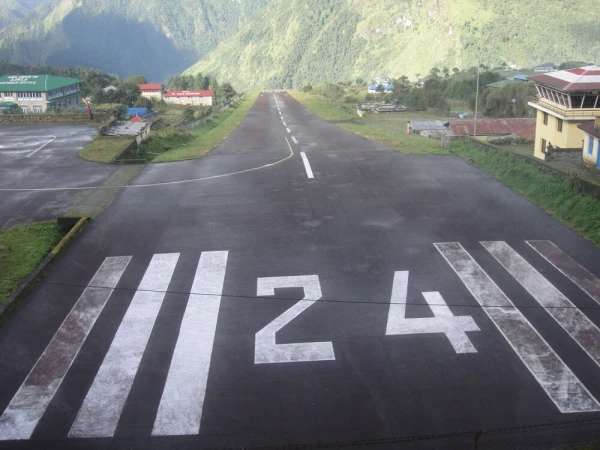
So the monsoon is the one season most guides will steer you away from, and the reasons are pretty practical. Heavy rain hammers the lower elevations, trails get muddy and slippery, and Lukla flights, already known for being unpredictable, become genuinely unreliable during this period. A delayed or cancelled flight at Lukla can throw your whole schedule off.
That said, the landscape during monsoon is stunning in a completely different way. Everything is lush and green, wildflowers are out, and the trails are almost empty. If you're a photographer or just someone who prefers fewer people and doesn't mind getting a bit wet, the monsoon has a charm to it that the peak seasons simply don't.
Daytime temperatures sit between 18 and 25 degrees at lower altitudes, which is actually warm and pleasant when it's not raining. The challenge is that it often is raining. So you go in with realistic expectations and solid waterproof gear.
So Which Season Is Actually Best for You
Spring and autumn are the safest bets for most trekkers. Clear skies, good trail conditions, and comfortable temperatures make both seasons reliable choices. Spring gives you flowers and expedition energy. Autumn gives you sharper views and festival culture. Both get crowded, and both reward early planning.
Winter and monsoon are niche seasons. They come with real challenges but also offer something the peak seasons can't, mainly solitude and a different kind of beauty. If you've done a lot of trekking and want something less ordinary, those off-season windows are worth considering.
Whatever time you choose, Index Adventure runs confirmed group departures in both April and October every year, with key dates like April 7 to 23 and October 4 to 20 being popular options for 2026. Private treks can be arranged outside those windows too. The season matters, but so does going with people who know the mountain in all its moods.
WiFi and Internet Access on the Everest Base Camp Trek
Let's be upfront about this. You're heading into one of the most remote mountain regions on the planet. Internet access exists up there, but calling it reliable would be a stretch. Think of it less like your home broadband and more like a signal that shows up when it feels like it. Knowing what to expect before you go makes the whole thing a lot less frustrating.
The Basic Picture
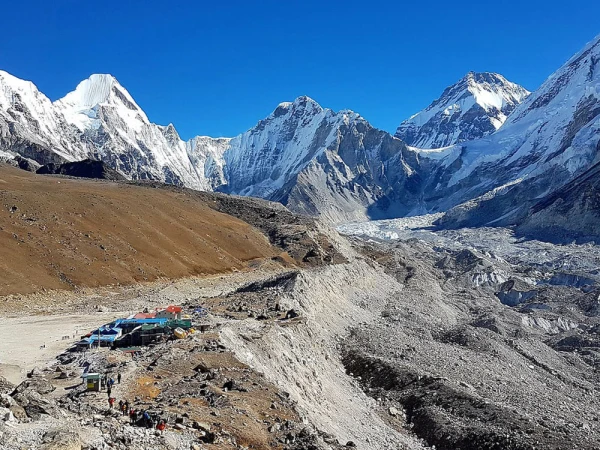
Most teahouses along the trail offer some form of WiFi, and mobile data works reasonably well in the lower sections. But the higher you climb, the weaker everything gets. By the time you reach Lobuche and Gorak Shep, mobile data is basically gone, and you're down to whatever satellite-based options the lodge has available. At Everest Base Camp itself, there are no teahouses, so there's no WiFi either. That's just the reality of being at 5,364 meters.
Index Adventure always recommends letting your family and friends know about this before the trek starts. Set the expectation early. That way nobody's panicking back home when your messages stop coming through above Dingboche.
Mobile Networks: What's Available
Two main providers cover the Everest region. Nepal Telecom, usually called NTC, and Ncell. Both are worth knowing about, but they perform a bit differently depending on where you are on the trail.
Ncell gives you decent 3G and 4G coverage in the lower Khumbu villages. Lukla, Phakding, Namche Bazaar, and sometimes even as far up as Tengboche. It's generally the stronger signal in those early sections of the trek. But above Dingboche, Ncell gets patchy and unpredictable, and by Lobuche it's essentially useless.
NTC has a slightly wider reach. It covers Lukla, Namche, and Dingboche reasonably well and holds on a bit longer at mid-altitude than Ncell does. For the Everest region specifically, a lot of experienced trekkers prefer NTC for that reason. But above Dingboche, NTC weakens too, and you shouldn't rely on it past that point.
You can buy SIM cards for both providers in Kathmandu. Bring your passport, as you'll need it for registration. Prepaid data packages start from around NPR 500 for basic usage, which is pretty reasonable. Get your SIM sorted in Kathmandu before you fly to Lukla. Don't leave it until you're on the trail.
Here's a rough guide to what signal you can expect by section:
Lukla to Namche: Decent signal for calls and messaging. Mobile data works well here.
Namche to Dingboche: Intermittent. You'll have signal sometimes and not others.
Above Dingboche: Almost nothing on mobile. Plan around this.
WiFi at the Teahouses of Everest Base Camp Trek
Most teahouses at the main stops offer paid WiFi. The coverage includes Lukla, Phakding, Namche Bazaar, Tengboche, Dingboche, and Pheriche. These connections run through satellite systems rather than cables or cell towers, which explains why they're slow and why the price creeps up the higher you go.
Expect to pay around NPR 500 to 800 per session at most teahouses. The connection is generally good enough for messaging, checking emails, and light browsing. Streaming video or uploading large files is a different story. Honestly, don't even try. You'll just burn through data and frustrate yourself.
One thing I'd say from experience: the best signal in any teahouse is almost always in the dining hall, not the sleeping rooms. Sit near the router in the evening and you'll get the most out of whatever connection is available. Connecting early morning or late at night also helps, because fewer people are online and the bandwidth goes further.
Airlink WiFi: Your Best Option at Higher Altitudes
Above Namche Bazaar, the most reliable internet option is Airlink WiFi. It's a satellite-based system that's been set up across teahouses in the Khumbu region, and it's basically the only thing that works properly at Lobuche and Gorak Shep, where mobile data is completely dead.
You buy a prepaid scratch card from the teahouse. The card comes with a username and password, usually the same for both. Then you connect within the lodge's range and use your data from there. Worth noting: you can't use it while you're trekking during the day. It's lodge-only.
Pricing for Airlink breaks down like this:
- 24 hours access costs NPR 1,200 and gives you 5 GB of data.
- 48 hours access costs NPR 1,500 and gives you 12 GB.
For most trekkers, the 48-hour card is the better value, especially if you're spending a rest day somewhere like Namche or Dingboche and want to do a proper catch-up with people back home.
Index Adventure also notes that you can pick up an Everest Link WiFi card in Lukla or Namche Bazaar for around $25. These cards give you 10 or 20 GB of data usable over 30 days across the Everest region. It's a solid option if you want something more consistent across the whole trek rather than buying individual cards at each stop. That said, connection quality still depends on weather and location, so it's not a guarantee.
A Few Practical Tips Before You Go
Pick up your SIM card in Kathmandu, not at the airport or on the trail. NTC is slightly better for the Everest region overall. Carry a power bank because charging at teahouses costs extra and you don't want a dead phone when you finally do have signal. Connect in the evenings when you're settled at your lodge and the signal is steadiest.
Use messaging apps instead of voice or video calls, they use far less data and work on slower connections. And download everything you might need offline, maps, guides, emergency contacts, before you leave Kathmandu.
The internet up there is basically a bonus, not a given. Treat it that way and you'll have a much better time
Everest Base Camp Trek for Different Ages, Families, and Solo Travelers
One of the most common questions people ask before booking this trek is whether it's actually doable for them, specifically their age, their fitness level, or their situation. And honestly, the answer is more open than most people expect. Kids, seniors, beginners, solo travelers, Index Adventure has guided all of them to Base Camp. What determines success isn't your age. It's your preparation, your pacing, and your mindset going in.
Can Children Trek to Everest Base Camp?
Yes, and it happens more often than you'd think. The generally recommended minimum age is around 10 to 12 years old, because kids at that age can better recognize and communicate how their body feels, which matters a lot when altitude sickness is a real concern. But Index Adventure has guided children as young as 7 to 9 years old to Base Camp. So it's not impossible at younger ages either, it just requires more careful management.
- If you're bringing kids, a few things matter more than anything else. First, build in extra acclimatization days. Don't rush the itinerary. Kids' bodies adjust to altitude differently, and pushing the pace is where things go wrong. Keep the daily walking distances shorter than the standard adult schedule.
- Second, bring snacks from home, things they actually like, because a tired, hungry child on a mountain trail is a very different challenge from a tired, hungry adult. Familiar food goes a long way.
- And third, lean on your guide. An experienced guide who's used to trekking with younger trekkers will pay close attention to their energy levels, morale, and physical signals in ways that make a real difference over a two-week journey.
Families who've done this trek together tend to describe it as one of the most meaningful things they've ever done as a group. That's not an exaggeration. Shared challenge does something to a family that a beach holiday just doesn't.
Trekking in Your 50s, 60s, and 70s
Senior trekkers reach Everest Base Camp regularly. Index Adventure has proudly guided trekkers in their 70s and beyond to the top. Age is genuinely not the barrier most people assume it is. What matters far more is your overall health, your physical preparation, and your willingness to move at a pace that respects your body rather than your ego.
Before you travel, get a proper medical check-up and make sure your doctor is comfortable with you doing high-altitude trekking. That's not just a formality. It's genuinely important information to have. In terms of training, focus on building stamina, balance, and leg strength in the months before you go. Long uphill walks with a loaded backpack are the closest thing to real preparation.
On the trail, hire a porter. Carrying a heavy pack for six or seven hours a day at altitude adds up over nearly two weeks, and removing that physical strain lets you save your energy for the actual trekking. Take it slower than you think you need to. Add two or three extra days to the standard itinerary if possible. A senior-friendly schedule with shorter daily distances and more acclimatization time makes the whole experience more enjoyable and significantly safer.
We'd argue that senior trekkers often get more out of this journey than younger ones. There's a different kind of perspective you bring when you've lived a full life and you're still out here climbing toward the highest base camp on earth. The sense of achievement at the end is something else entirely.
Solo Travelers
The EBC trail is one of the most social trekking routes anywhere in the world. You're never really alone on it even if you start out that way. That said, trekking completely independently is no longer permitted in Nepal, so if you're coming as a solo traveler, you'll need to join a guided group or arrange a private guide through a registered company like Index Adventure.
Joining a group trek is honestly a great option for solo travelers. You share costs, you have built-in company, and the trail friendships that form over shared meals and shared hard days tend to be surprisingly real. There's something about doing something genuinely difficult together that fast-tracks the kind of connection it would normally take years to build.
First-Time and Beginner Trekkers
Beginners can absolutely do this trek. You don't need prior mountaineering experience, technical climbing skills, or a background in high-altitude adventure. What you do need is a basic level of fitness, the ability to walk for five to six hours a day on uneven terrain, and a genuine mental commitment to the process.
Index Adventure has successfully organized this trek for complete beginners, teenagers, and seniors in their late 60s and 70s. The pattern is always the same: the people who succeed aren't necessarily the fittest or the youngest. They're the ones who prepared properly, paced themselves honestly, listened to their guide, and kept moving steadily even when it got hard.
What Works for Every Age Group
Regardless of whether you're 10 or 72, a few things hold true across the board. Acclimatization days are not optional. They're the difference between reaching Base Camp and being evacuated partway. Pre-trek training that actually mimics the conditions, long hikes, uphill climbs, carrying a backpack for several hours, prepares your body in a way that gym sessions alone don't. And the single most important mental shift you can make is letting go of the idea that speed equals success. It doesn't. Steady, consistent effort over many days is what gets you there.
So if you've been sitting on the fence wondering whether this trek is for you, the honest answer is that it probably is. With the right preparation, the right support, and the right pacing, Everest Base Camp is within reach for a much wider range of people than most assume. Index Adventure's job is to make sure every trekker, whatever their age or experience level, gets the guidance, safety, and motivation to finish the journey they came.
Permits for the Everest Base Camp Trek
Two permits. That's all you need for the standard EBC trek. After helping hundreds of trekkers through this process, I can tell you it's simpler than most people expect, and the fees are genuinely small compared to everything else you'll spend on this trip.
Why the EBC Trek Permits Exist
The Khumbu region sits inside Sagarmatha National Park, a UNESCO World Heritage Site. These fees go directly toward maintaining trails, protecting wildlife, and supporting the Sherpa communities who've called this place home for generations. From what I've seen, most trekkers are happy to pay once they understand where the money actually goes.
The Two Permits You Need
- The Khumbu Pasang Lhamu Rural Municipality Entrance Permit covers your entry into the Khumbu region. It costs around NPR 2,000 per person, roughly $15 to $20 USD, and you pick it up in Lukla or Monjo.
- The Sagarmatha National Park Entry Permit covers the protected park area itself. This one costs around NPR 3,000 per person, about $25 to $30 USD, plus 13% VAT. You can get it at the Nepal Tourism Board office in Kathmandu before you fly, or at the park entrance in Monjo.
Quick note: the old TIMS card is no longer required on the standard EBC route. And the Gaurishankar Conservation Area Permit only applies if you're starting from Jiri rather than flying to Lukla.
What to Bring and What to Know
Carry your passport, a couple of passport-sized photos, and passport copies. All fees must be paid in Nepalese Rupees cash, so sort that out in Kathmandu before heading to Lukla. Keep your permits somewhere easy to reach in your pack because you'll show them at multiple checkpoints along the trail.
How Index Adventure Handles It: When you trek with Index Adventure, we manage the entire permit process for you. We collect your documents during booking and handle everything on your behalf. You show up ready to trek. We handle the paperwork.
One More Recommendation: Get travel insurance that specifically covers emergency helicopter evacuation up to 6,000 meters. It's not a permit, but in my experience it belongs in the same conversation. High-altitude rescues are expensive. Having solid coverage means that if something goes wrong, the only focus is getting you safe.
Acclimatization on the Everest Base Camp Trek
This is the part of the trek that most first-timers underestimate. And from what I've seen guiding people through this route, it's also the part that determines whether you make it to Base Camp or have to turn around early. Acclimatization isn't optional. It's the whole game.
What's Actually Happening to Your Body
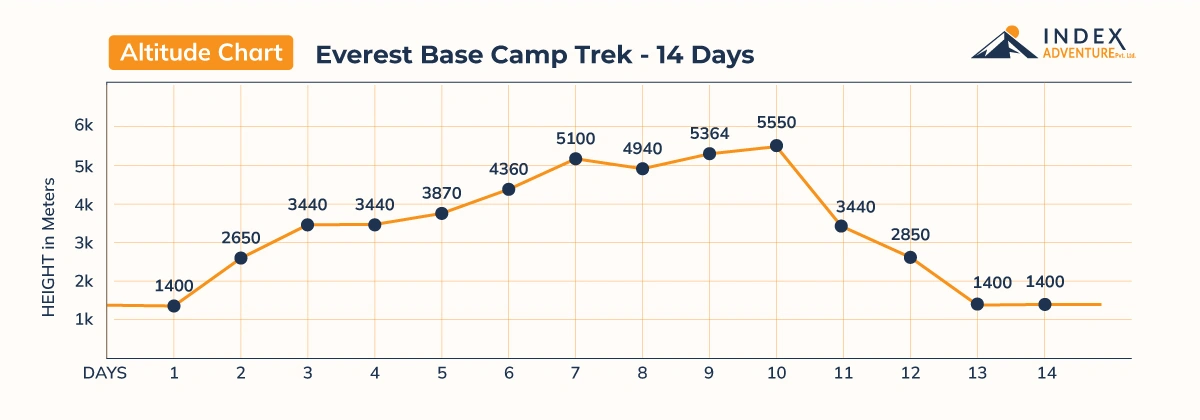
You leave Kathmandu at around 1,440 meters. An hour later, you land in Lukla at 2,860 meters. That same day, you hike down to Phakding at 2,651 meters for your first night. By the time you reach Namche Bazaar, you're at 3,440 meters and your body is already starting to feel it. Some people get mild headaches. Some feel unusually tired. Others feel nothing at all. But above 3,000 meters, your blood oxygen drops and your body has to work harder to do everything it normally does on autopilot.
Go too fast, and that's where acute mountain sickness, AMS, sets in. Headaches, nausea, dizziness, loss of appetite. If it gets worse and you keep climbing anyway, it can develop into something far more serious, specifically HAPE or HACE, which are fluid buildup in the lungs or brain respectively. That's a medical emergency. So the goal of acclimatization is simple: give your body time to adapt before you push it higher.
How Index Adventure Builds Acclimatization Into Your Trek
The standard itinerary includes two dedicated acclimatization days. The first is at Namche Bazaar at 3,700 meters, and the second is at Dingboche at 3,956 meters. These aren't rest days in the sense of doing nothing. They follow the "climb high, sleep low" principle, which basically means you hike up to a higher elevation during the day and come back down to sleep. This triggers your body to produce more red blood cells without the stress of actually sleeping at altitude.
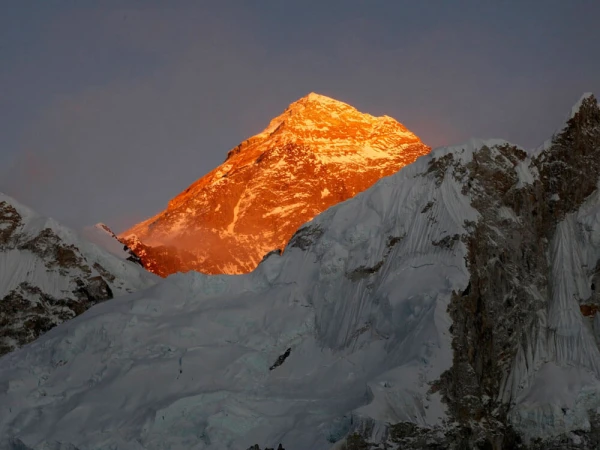
On the Namche acclimatization day, a short hike up to the Hotel Everest View at around 3,880 meters gives you your first real look at Everest itself. It's a genuinely rewarding morning. On the Dingboche day, a hike toward Nangkarshang Peak above the village does the same job higher up the route.
Index Adventure guides carry pulse oximeters throughout the trek to monitor your blood oxygen saturation. The target is to stay above 85 to 90 percent. If your levels drop below that, your guide will know before you probably do.
The Rules That Actually Matter
Never gain more than 300 to 500 meters in sleeping elevation per day once you're above 3,000 meters. Drink 3 to 4 liters of water, warm soup, or fluids daily. Keep your pace slow and steady. The Nepali phrase "bistarai bistarai" means slowly, slowly, and the guides use it constantly for good reason. Avoid alcohol, especially in the first few days at altitude. And if you feel anything unusual, tell your guide immediately. Even something that feels minor.
Index Adventure guides carry first aid training and have a minimum of seven years guiding experience in the Himalayas. They watch for symptoms constantly, but they can only act on what they know. Your job is to communicate honestly, even when you feel like you're being dramatic.
On Diamox: Some trekkers choose to carry Diamox, the brand name for Acetazolamide, which is a medication that helps your body acclimatize faster. It's worth discussing with your doctor before the trek. It works for a lot of people, but it has side effects and isn't a substitute for proper pacing. Think of it as a tool, not a shortcut.
When to Take It Seriously
A mild headache that clears with water and rest is normal. But if a headache doesn't respond to painkillers, or if you develop a persistent cough, confusion, or shortness of breath at rest, those are warning signs of something more serious. The only treatment for severe altitude sickness is immediate descent. Index Adventure guides are trained to make that call, and they will make it without hesitation if they need to. No summit or base camp is worth your health.