Permits for Upper Mustang in 2026
Restricted Area Permits: The old flat-rate USD 500 for 10 days is gone. The new system charges USD 50 per person per day, so you only pay for the exact number of days you spend inside the restricted area. An 11-day tour costs USD 550. A 6-day tour costs USD 300. Straightforward.
You also need the ACAP (Annapurna Conservation Area Permit) at NPR 3,000, around USD 25 for foreign nationals.
As of 2026, the TIMS card requirement has been removed for most restricted areas including Upper Mustang, though we may still include it for safety tracking purposes.
A few things that haven't changed: the two-person minimum still applies, a licensed guide is still compulsory, and permits can only be arranged through a government-registered Nepal trekking agency. You cannot obtain the Restricted Area Permit independently. Bring your passport and two passport-sized photographs.
Permits Checkpoints of Upper Mustang Overland Tour
Permit checkpoints sit at Kagbeni on entry and Chusang on exit. Carry original documents at all times as spot checks happen throughout the route. Children under 10 pay no permit fee.
Index Adventure handles all permits as part of your tour package. You don't need to chase any of this down yourself.
Altitude Sickness during Upper Mustang Tour: What to Know
Going above 3,000 meters affects some people. Here is the fun part, even some vehicles are also affected by the altitude. But no need to worry, we use experienced drivers and suitable, well-maintained vehicles for the challenging terrain to avoid stalling or mechanical failures in remote areas. With the gradual ascent built into our itinerary, most travellers do fine. But knowing what to watch for matters.
Common symptoms above 3,500 meters: headache, fatigue, disrupted sleep, nausea, shortness of breath on steeper sections, dry skin, and chapped lips from the wind.
If you feel unwell, tell your guide immediately. Don't push through worsening symptoms. The only safe treatment if things deteriorate is to descend. Our guides carry pulse oximeters and a dedicated medical kit throughout the tour.
Practical tips:
- Drink 3 to 4 litres of water per day
- Don't rush above 3,500 meters
- Avoid alcohol especially in the first few days
- Carry Diamox if prescribed, paracetamol for headaches, and Imodium for digestion
Points on the route requiring closer self-monitoring:
- Chele (3,050m): where significant climbing begins
- Syangboche (3,800m): mild altitude sickness commonly starts here
- Nyi La Pass (4,010m): exposed and windy
- Lo Manthang (3,840m): extended time at altitude, monitor daily
- Dhakmar (3,820m): trail erosion risk in wet weather
Consult your doctor before travel regarding altitude medication. This guidance does not replace personalised medical advice.
Travel Insurance
Travel insurance is mandatory for this tour. Your policy must explicitly cover high-altitude trekking and emergency helicopter evacuation above 4,000 meters, medical treatment and hospitalisation, and trip cancellation or interruption. Many standard policies exclude trekking above 3,000 meters unless you specifically add altitude cover. Read the fine print carefully.
In Upper Mustang there are limited road-accessible hospitals. Helicopter evacuation is often the only way out in a serious emergency and it is expensive. Buy your insurance before leaving home, bring a printed copy, and share your insurer's emergency contact number with us before departure.
Arriving in Nepal
You'll fly into Tribhuvan International Airport in Kathmandu. Visa on arrival is available for most nationalities. Bring a valid passport with at least six months remaining validity, one passport-sized photograph, and USD cash for the visa fee. The queue moves slowly so keep your documents accessible.
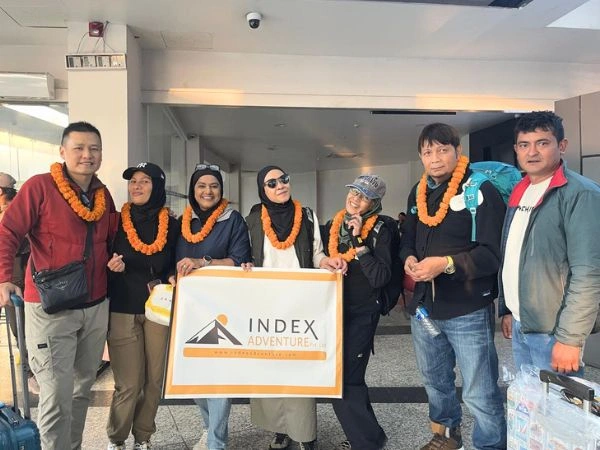
Our team meets you at the arrivals gate and takes you directly to your hotel in Thamel. A pre-tour briefing covers permits, packing, altitude, and your full itinerary before you head toward Pokhara.
Money for Upper Mustang Jeep Tour
The last reliable ATM is in Jomsom. There are no ATMs anywhere inside the Upper Mustang restricted zone, and even the Jomsom ATM can be out of service. Withdraw all Nepali Rupees you need for personal expenses from Pokhara before departure. Cards are not accepted at teahouses.
Carry small denomination bills, NPR 100s and 500s, for showers, tips, WiFi, and snacks. Keep a separate emergency cash reserve that you don't touch during daily spending.
Rough daily personal expenses per person:
- Hot shower: USD 1 to 3
- Device charging: USD 1 to 2
- WiFi where available: USD 2 to 5
- Extra snacks: USD 10 to 15
- Drinks: USD 5 to 10
Teahouses: What to Expect
Rooms are basic. Twin beds, blankets, wooden walls, no heating. The dining area usually has a wood or dung stove that gets lit in the evening and that's where the warmth lives. Toilets are mostly squat-style and shared. Hot showers exist in some places and cost around NPR 300 to 500. In remote villages above 3,500 meters you may just get a bucket of hot water, and honestly, it's enough.
Power cuts are common. Device charging costs extra and usually happens in the dining area. Bring a power bank of at least 20,000mAh and charge everything fully in Pokhara before you enter the restricted zone.
In larger villages like Lo Manthang and Kagbeni you'll find slightly better rooms, sometimes with attached bathrooms. In more remote spots like Dhakmar or Ghiling expect mud walls, shared squat toilets, and minimal insulation. What these places lack in comfort, they more than make up for in home-cooked food and the genuine warmth of the families running them.
Best Time to Visit Upper Mustang
Most of Nepal shuts down during monsoon season. Upper Mustang doesn't. Sitting behind the Annapurna and Dhaulagiri ranges in a natural rain shadow, this region receives less than 200mm of annual rainfall, which makes it one of the only destinations in Nepal that works brilliantly from May through October.
Spring (March to May) brings mild temperatures, clear skies, and the famous Tiji Festival in Lo Manthang, a three-day masked dance ceremony that draws locals from across the region. We'd argue this is the most culturally rich window for the tour.
Summer (June to August) is genuinely the hidden sweet spot. While the rest of Nepal is wet and cloudy, Upper Mustang stays dry and wide open. The Yartung horse festival runs in August, crowds are minimal, and the landscape takes on a surprising green at lower elevations. Afternoon winds through the Kali Gandaki valley pick up between noon and 4pm, but with a good buff and windproof jacket it's completely manageable.
Autumn (September to October) offers stable weather, clear mountain views, and comfortable temperatures throughout. A reliable choice for first-time visitors.
Winter (November to February) is possible for experienced cold-weather travellers but high passes can close due to snow and temperatures at altitude drop hard. We generally recommend avoiding this window unless you specifically want solitude and have the right gear.
Upper Mustang Jeep Tour Difficulty
This is primarily a jeep-based tour, which means the physical demands are significantly lower than a standard trekking itinerary. You're riding rather than walking for the majority of each day.
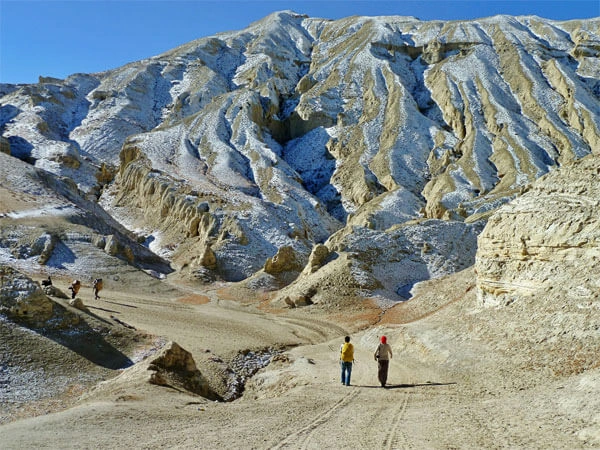
That said, it's not without its challenges. Road conditions beyond Kagbeni are rough, unpaved, and sometimes genuinely demanding on the body even as a passenger. Long jeep days on corrugated tracks can be tiring in a way that sneaks up on you. Short walks to monasteries, caves, and viewpoints involve uneven rocky terrain and occasional steep sections. And the altitude is real. Lo Manthang sits at 3,840 meters and some optional routes push above 4,200 meters.
We'd describe the overall difficulty as moderate. Reasonable fitness helps but prior trekking experience is not required. The bigger demands are patience, adaptability, and a genuine comfort with basic conditions. If you can handle a long day in a 4WD across rough mountain roads and sleep comfortably in a simple teahouse, you'll do well here.
Anyone with cardiovascular or respiratory conditions should consult their doctor before booking.
Transportation: Getting Mustang and Getting Around
Kathmandu to Pokhara is the first leg. This can be done by tourist bus, which takes roughly 6 to 7 hours, or by a 25-minute domestic flight if you'd prefer to save the time. Index Adventure can arrange both options depending on your preference and schedule.
Pokhara to Lo Manthang and beyond is where the jeep takes over entirely. Index Adventure operates comfortable 4WD vehicles driven by experienced local drivers who know these roads in all conditions. The journey from Jomsom to Lo Manthang typically takes a full day with stops along the route.
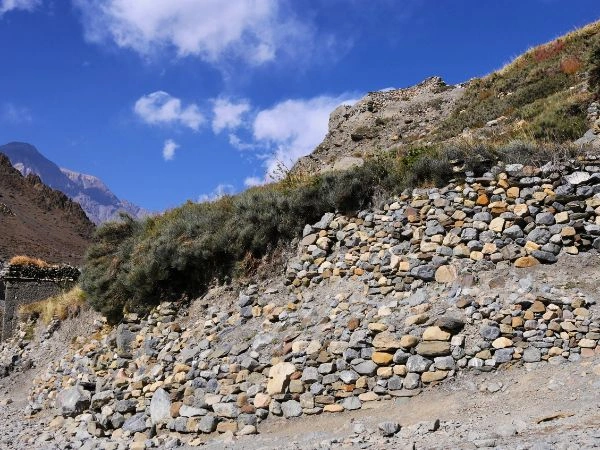
Road conditions vary. Some sections are well maintained, others are narrow rocky tracks carved into cliff faces above river gorges. It's dramatic, often breathtaking, and occasionally a little white-knuckle. That's part of the experience. Return to Pokhara follows the same route back.
Porters
Porters are not included in the package price. If you want one, let us know before departure. The additional cost is USD 300 (for 2 porters) for the full tour, and a porter carries a maximum of 20kg. Travelling lighter means acclimatising better and having more energy for what you came here to experience
It also directly supports local employment in a region where tourism is one of the few reliable income sources. If you hire a porter, a tip of around USD 100 to 150 for the full tour is appropriate.
Tipping
Tipping guides, drivers, and porters is normal and expected in Nepal. Tips are usually given as a group at the end of the trip.
- Guide: USD 100 to 150 for the full tour
- Porter if hired: USD 100 to 150 for the full tour
- Driver: USD 1 to 5 depending on the journey
- Restaurant service: around 10% of the bill
Drones
Drones are not permitted in Upper Mustang without a special government permit that is genuinely very difficult to obtain. Leave the drone at home unless you've arranged this well in advance through us.
Extending Your Trip
If you want more Nepal after the tour ends in Pokhara, we can arrange it. Popular options include Chitwan National Park for jungle wildlife, Bardia National Park for a more remote safari, or a guided heritage tour of Kathmandu Valley. If you'd prefer to walk down from Jomsom rather than fly, that adds approximately 3 to 4 days. Just let us know before departure and we'll build it in.
One Last Thing
Always listen to your guide. If weather or road conditions change suddenly, they make the call. That's what they're there for. Upper Mustang is extraordinarily windy beyond Kagbeni. The dust and wind are constant companions. Bring a face covering and respect both. There are very few places in the world like this one, and we genuinely mean that.