15Days

Upper Mustang Trek - 15 Days

392 reviews
57 reviews
View Photos
Customize Trip
Duration
15 Days
Trip Grade
Moderate
Country
Nepal
Maximum Altitude
3,820M
Group Size
02 - 16
Starts
Jomsom
Ends
Pokhara
Activities
Trekking
Best Time
April, May, June, July, August, Sep, Oct, Nov

Upper Mustang Trek Trip Overview

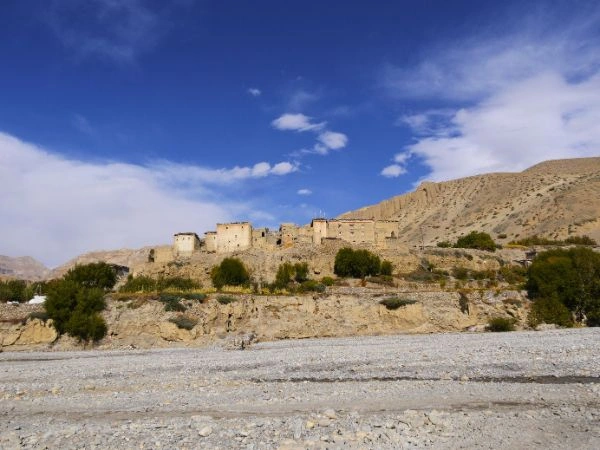
Are you ready to embark on an adventure to the hidden kingdom of the Upper Mustang? A journey to this remote region of Nepal is like stepping back in time. The Upper Mustang Trek is not just a trek but a journey into a world that has remained untouched by modernization. The stark and arid landscapes, ancient caves, and monasteries will leave you in awe. 

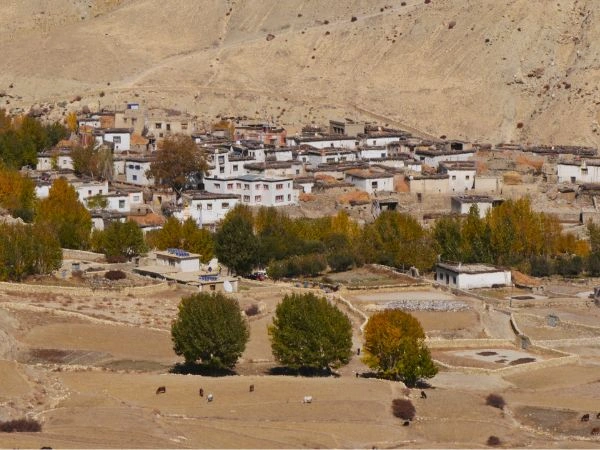
As you trek through this remote region, you'll pass through quaint villages, and a stunning desert-like landscapes that will take your breath away. You'll witness the traditional way of life of the local people, who have lived in these remote valleys for centuries. Our trek is an opportunity to immerse yourself in a world that is far removed from the hustle and bustle of modern life.

Moreover, you'll hike further into the ancient Kingdom of Mustang, Lo Manthang. This kingdom was once forbidden till the year 1992 and has still managed to preserve its beauty. This kingdom's landscape and culture will remind you of distant Tibet. 

Altogether, this trek will take you on a unique adventure into the land of Upper Mustang. On this journey, you'll witness the difference in landscape and be acquainted with the people who have their roots embedded in Tibetan culture.

Pokhara to Mustang, Nepal Distance: The Upper Mustang trek typically begins after a short flight or long drive from Pokhara to Jomsom (approx. 60-70 km air distance), followed by a 90–100 km trek to Lo Manthang. The total trekking route covers roughly 125 km over 10-14 days, beginning from the entry point at Kagbeni.

Highlights of Upper Mustang Trek 2026

  • Begin your journey with a sightseeing tour in Kathmandu, where you can explore the rich Nepalese heritage and culture.
  • Take a picturesque drive to Pokhara, enjoying the fresh mountain air and passing through verdant forests.
  • In Pokhara, relax by the serene Phewa Lake and soak in the tranquil ambiance before your adventure.
  • Catch a scenic flight from Pokhara to Jomsom, the bustling hub for trade and commerce in the district.
  • Engage with the locals in Jomsom and gain insight into their unique way of life and ancient traditions.
  • Enjoy delicious local cuisine like Dhal Bhat(rice, lentils, and vegetables), momos, spicy curries, etc.
  • Explore the ancient kingdom of Lo-Manthang, which has remained untouched by modernization.
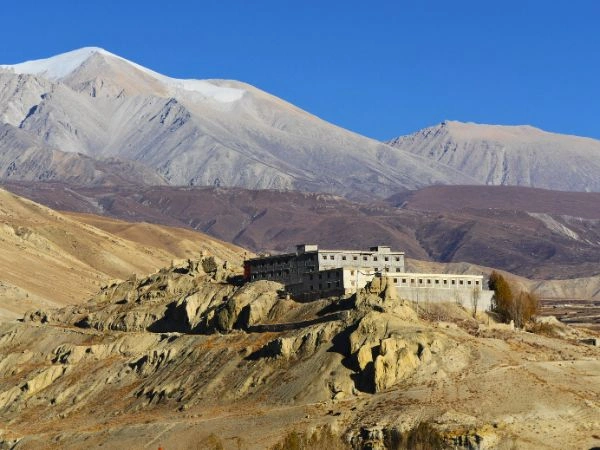
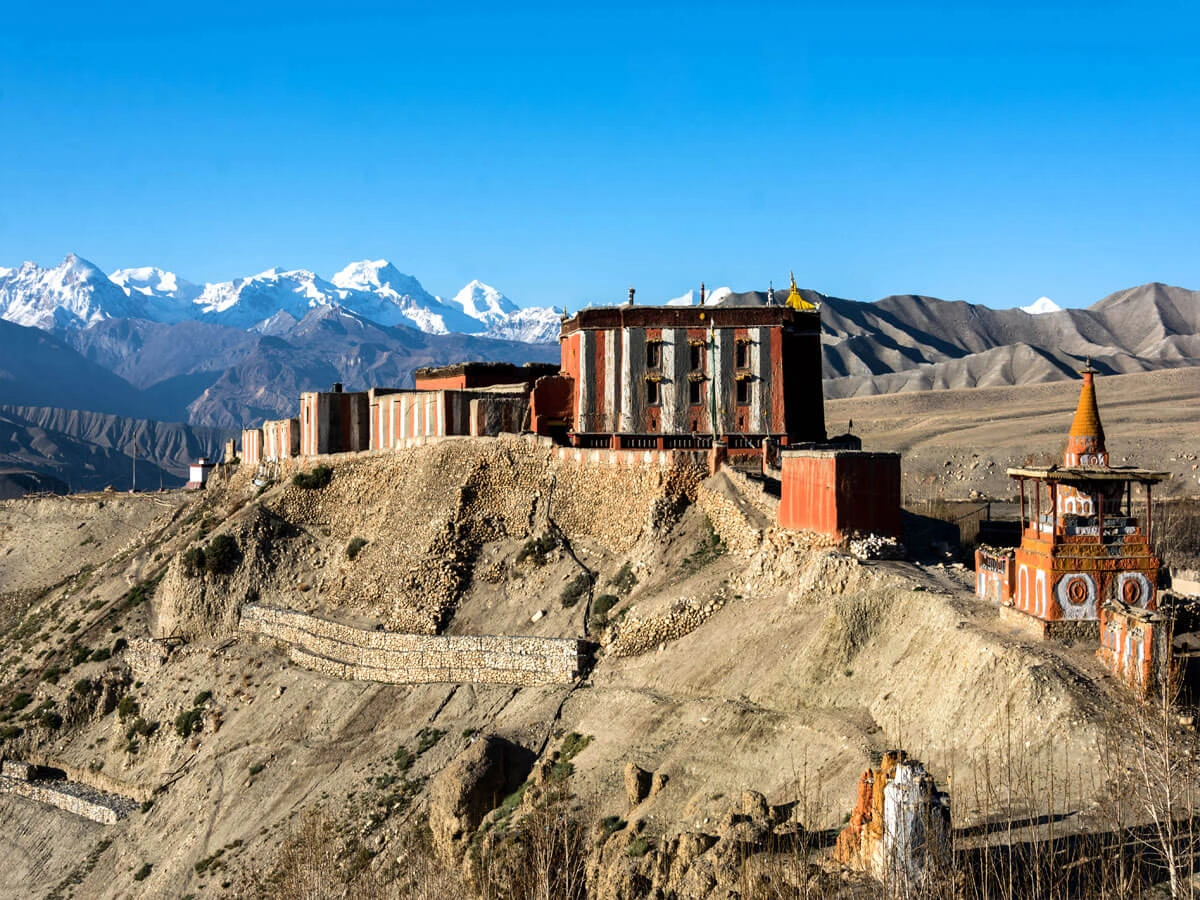
  • Make a stop at Namgyal Gompa, which is situated on a hilltop. You can also enjoy the beautiful mountain views from the hill.
  • Discover walled caves, chortens, and monasteries and engage with the local monks for a deeper understanding of their spiritual practices.
  • Visit the revered Muktinath, a sacred site for both Hindus and Buddhists and experience the profound spiritual energy that radiates from this location

Trek to Upper Mustang with an experienced local guide and Best Services

At Index Adventure, we are your premier choice for Upper Mustang treks, fully registered with the Nepal Tourism Board and TAAN, with deep local expertise in this extraordinary restricted Tibetan-style region. We handle all complex special area permits, provide experienced high-altitude guides with first aid training, and offer fully transparent pricing that covers flights, accommodation, and porter fees with zero hidden costs.

From the ancient walled city of Lo-Manthang to the dramatic landscapes of the Himalayas, our specialized local guides bring unmatched cultural and historical insight into every step of your journey. With robust emergency evacuation plans, route customization, and glowing reviews on TripAdvisor and travel forums, Index Adventure delivers a safe, seamless, and unforgettable Upper Mustang trekking experience.

Whether you are trekking in summer or planning a once-in-a-lifetime adventure, you can join Index Adventure for a safe, seamless, and unforgettable Upper Mustang experience.

Book your trek now and explore the forbidden kingdom like never before!

Upper Mustang Trek - 15 Days Itinerary

Upper Mustang Trek 15 days Itinerary

Our Upper Mustang Trek package starts as you land at the Tribhuvan International Airport. You will be greeted by one of our staff. He will then escort you to the hotel in Kathmandu.

A sightseeing tour of Kathmandu city is organized before your real adventure. The journey starts with a beautiful drive to Pokhara. From here, you will fly to Jomsom and begin your trek. The first stopover is at Kagbeni. After staying here for the night, you’ll cross several villages like Chele, Geling, and Charang to reach the capital of the ancient kingdom Lo, Lo - Manthang.

Now, you’ll hike for around 2 hours and explore the Namgyal Gompa. After exploring, you’ll make your way to the last village of Lo Manthang, Tingkha, and head back to Lo Manthang for an overnight stay.

Continuing the journey, you’ll cross villages like Drakmar, Shyangmochen, and Chhusang to reach Muktinath. Now, it's time to head back to Jomsom and fly back to Pokhara. The flight back to Kathmandu from Pokhara marks the end of your journey. 

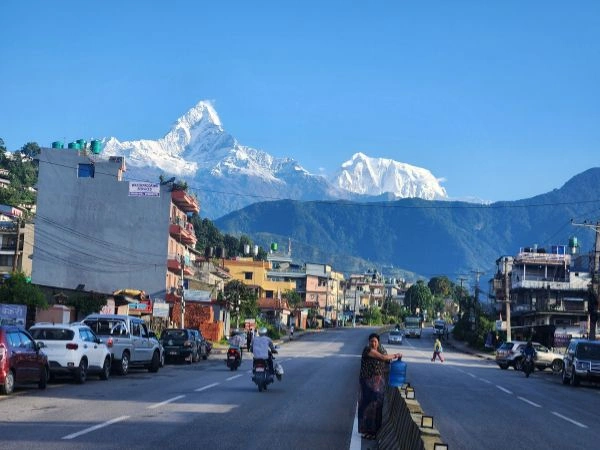
You will be met by your guide early in the morning for the drive to Pokhara. The drive is long but very scenic and interesting. Upon arrival, you will be transferred to Pokhara hotel for check in. In the evening, you can enjoy boating on Fewa Lake and you might wish to photograph the reflection of Mount Machhapuchhre and the Annapurna Range on the serene water. Overnight at the hotel with breakfast included.

If you want, you may choose to return by a 25-minute flight (not included in the package). Your trek package completes at Kathmandu.

pokhara-city-1

Early in morning, we will fly between the snow covered peaks of Annapurna and Dhaulagiri to Jomsom. The sights of towering massifs rising to more than 8,000 meters, and the river with the deepest gorge on the planet, are just mind-blowing.

At Jomsom, we will start our Upper Mustang trek to Kagbeni. This is the main gate to Upper Mustang, situated at an altitude of (2,800m), Kagbeni village dates from around the 14th century, when it was a check post for traders from Nepal. There is still a checkpoint to control the groups departing for Muktinath and Mustang.

Overnight at a guesthouse - breakfast, lunch and dinner included.

kagbeni-village

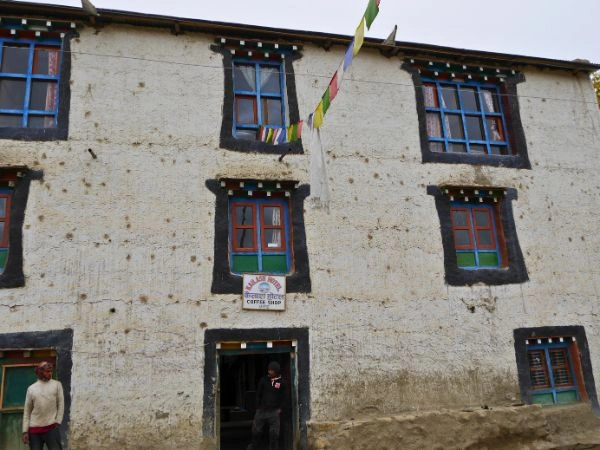
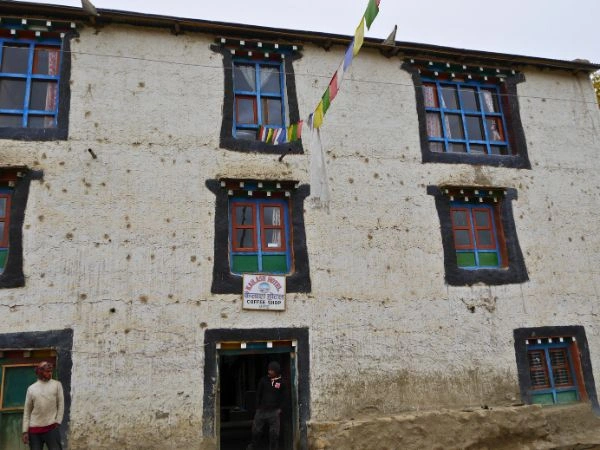
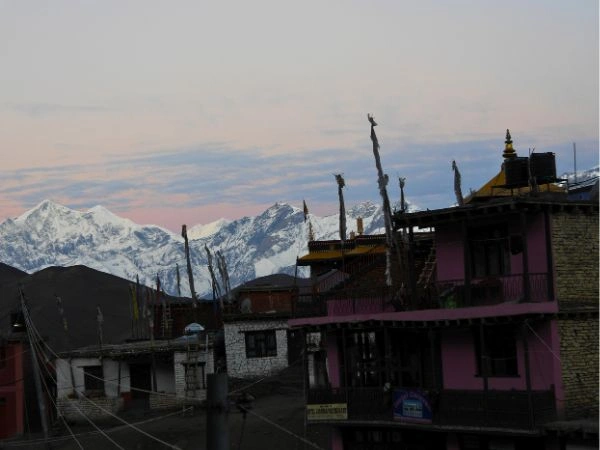
The trail takes us to the east bank of the Kaligandaki river. We traverse several ridges to Tangbe village. This village is a labyrinth of narrow alleys amongst white-washed houses, fields of buckwheat, barley, wheat and apple orchards. We can take in the view of the Nilgiri peak, which dominates the southern skyline of Kagbeni.

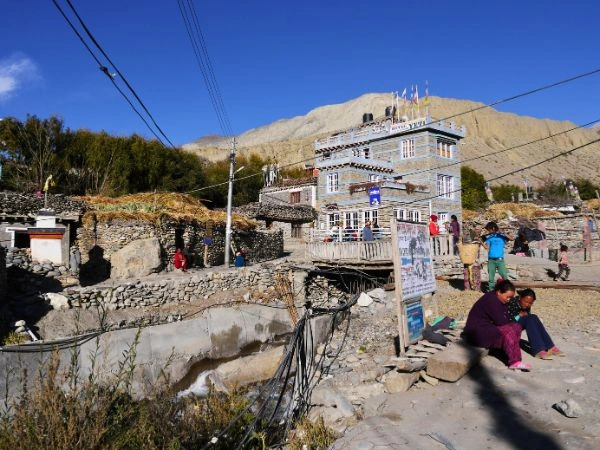
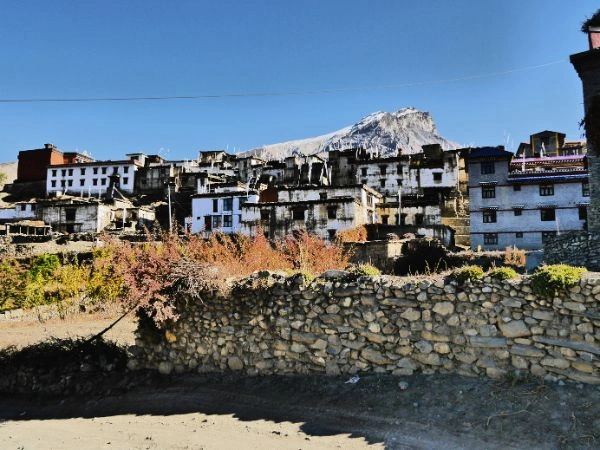
Beyond Tangbe, we will reach Chhusang village after about one and a half hours walking. We cross the river and continue climbing to a huge red chunk of conglomerate that has fallen from the cliffs above, forming a tunnel through which the Kaligandaki flows. We leave the Kali Gandaki valley and climb steeply up a rocky gully to Chele.

Overnight at a guesthouse - breakfast, lunch, and dinner included.

way-to-kagbeni-1

On Day 4 of your Upper Mustang journey, we will depart from Chele for a rigorous yet visually stunning trek to Syangboche. The trail begins with a steep climb toward the Taklam La pass (3,624m), where you’ll be rewarded with your first expansive views of Tilicho Peak and the Damodar Danda.

As we traverse the rugged, desert-like terrain, you’ll navigate deep canyons and pass through the lush, green oasis of Samar village, a perfect spot for a midday break.

Continuing from Samar, you have the option to take a detour to the sacred Chungsi (Rangchung) Cave, a renowned pilgrimage site tucked into a vertical cliffside where Guru Rinpoche is said to have meditated. After a final push over the Dajori La pass (3,735m), you will descend into the quiet settlement of Syangboche.

Overnight at a guesthouse -breakfast, lunch and dinner included.

chele-way-to-lo-manthang-1

Our trek from Syangboche to Ghami begins with a steady morning climb toward the Yamda La pass (3,850m), where you’ll pass through a desert-like landscape dotted with remote teahouses and ancient chortens.

The trail offers a true sense of the high-altitude wilderness as you navigate the "cold desert" terrain, eventually reaching the higher Nyi La pass (4,010m). This pass serves as a spectacular natural gallery, offering 360-degree views of the Annapurna and Dhaulagiri ranges against the stark, colorful cliffs of Mustang.

After crossing the pass, we will begin a steep but scenic descent into the Ghami Valley, where the landscape shifts to include patches of green barley and buckwheat fields. As we approach Ghami (3,520m), the third-largest village in the region, we will be struck by its dramatic backdrop of red-hued cliffs and the sight of the longest Mani wall in Mustang, stretching hundreds of meters across the valley floor.

Our day concludes in a traditional stone-built teahouse within the village, where you can explore the local Ghami Monastery and experience the deep-rooted Tibetan-influenced culture of the Lo region before resting for the night.

Overnight at a guesthouse -breakfast, lunch and dinner included.

dhakmar-village

On Day 6 of the Mustang Nepal trek, we will transition from Ghami to Charang (Tsarang), a 10.7-11.5 km trek that typically takes 4-5 hours. After leaving the white-washed houses of Ghami, our morning begins with a short descent to a suspension bridge over the Ghami Khola. From the river, you will ascend toward a high plateau, passing alongside the longest Mani wall in Mustang, which stretches over 300 meters and is intricately carved with Buddhist mantras.

The trail continues over the Choya La (or Charang La) pass (3,870m), offering a final, panoramic vantage point of the isolated Trans-Himalayan valley and distant peaks like Annapurna and Dhaulagiri before you begin the gradual descent into Charang. 

As we arrive in Charang (3,560m), once the medieval capital of the Kingdom of Lo, you will see the village perched dramatically at the edge of the Charang Chu canyon. The skyline is dominated by two massive structures: the five-story White Palace, which now serves as a museum housing ancient artifacts.

The 14th-century Red Gompa (Tsarang Monastery) is famous for its grand statues and internal frescoes of the Medicine Buddha mandala. After checking into a traditional teahouse, we will have the afternoon to explore the narrow, winding alleys and witness the local "Lo-Pa" lifestyle.

Overnight at a guesthouse -breakfast, lunch and dinner included.

samar

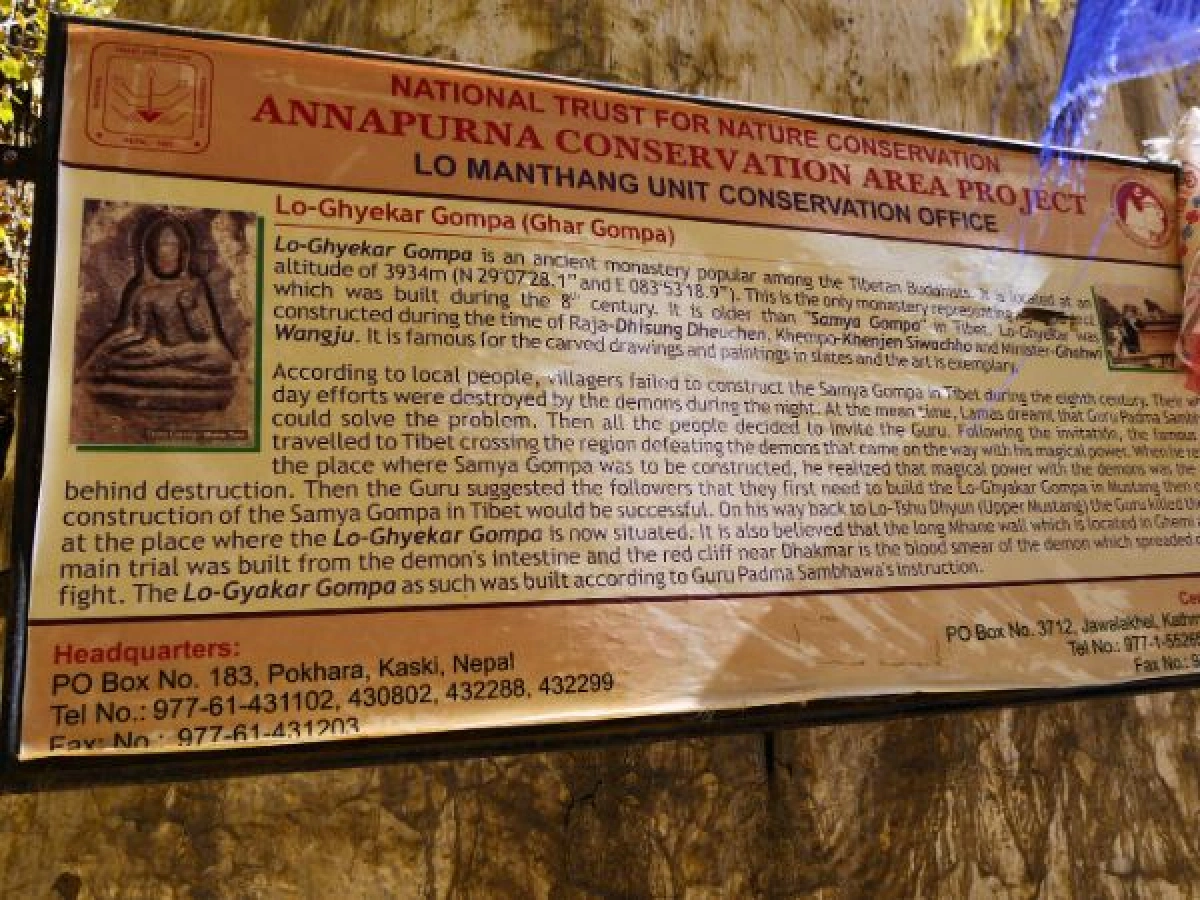
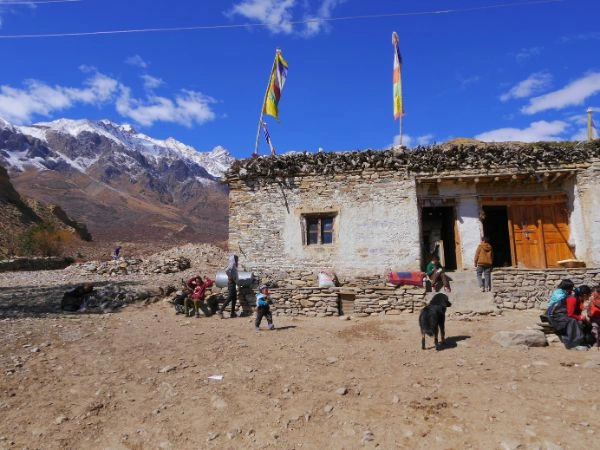
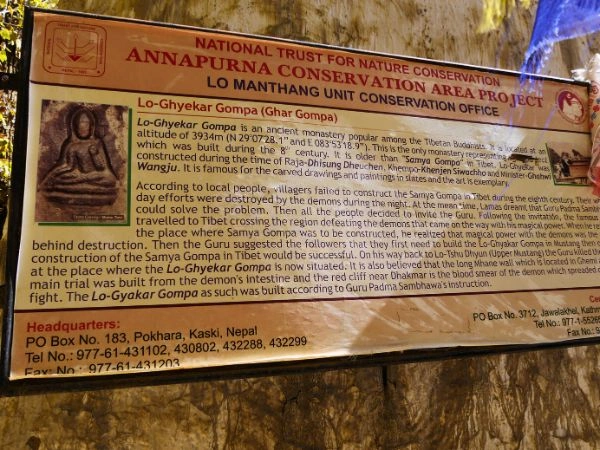
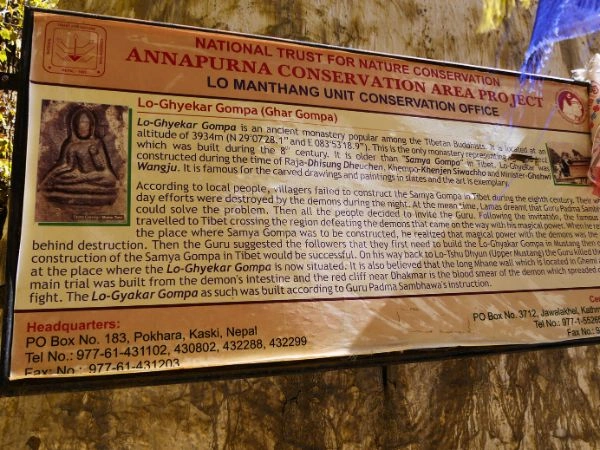
Our trail ascends steadily until Lo-Gekar. Lo-Gekar Gompa is older than Samye Gompa in Tibet. It is in fact one of the oldest Gompas the region. After visiting Lo-Gekar, we continue our upper Mustang trek to Lo-Manthang.

The trail to Lo-Manthang is well-defined with some minor climbing. We will pass the walled city of Lo along the trial, then make a short descent, cross a stream and climb to the plateau of Lo-Manthang.

Overnight at a guesthouse -breakfast, lunch and dinner included.

lo-manthang-1

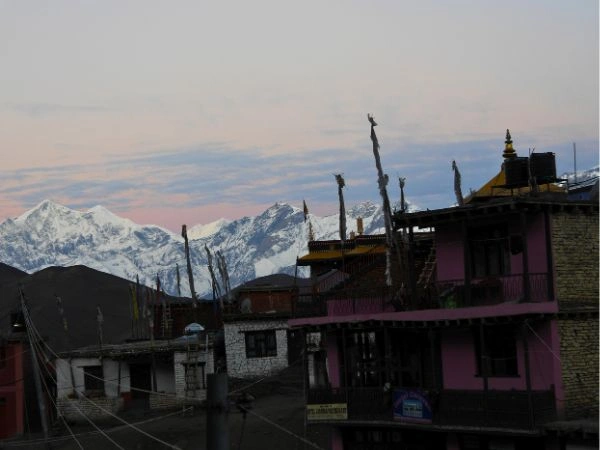
You will spend the day exploring the ancient city of Lo Manthang, visiting the monasteries, and experiencing the traditional lifestyle of the people. This town is also home to four major temples - Jampa Gompa (Jampa Lhakhang), Thubchen Gompa, Chodey Gompa, and Choprang Gompa.

Jampa Gompa is the oldest and is also known as God's house. Similarly, Choprang Gompa is also known as New Gompa. The Nepal government opened Upper Mustang for foreigners in 1992, but, even today, tourism to Upper Mustang remains limited.

Overnight at a guesthouse -breakfast, lunch and dinner included.

lo-manthang-explroation-day

After our exploration of the walled city of Lo Manthang, we begin our return journey south toward Ghami. This return leg typically follows a different route via Dhakarjung and Ghar Gumba to maximize your experience of the region’s hidden gems. The trek takes approximately 6 to 7 hours, starting with a steady climb out of the Lo Manthang valley toward the Mui La pass (4,170m).

From this high vantage point, we get a final, sweeping look at the "Plain of Aspiration" before descending into a rugged landscape of eroded red cliffs and wind-sculpted rock formations that define the heart of Mustang.

The highlight of this journey is a midday stop at Ghar Gumba (Lo Gekhar Monastery), one of the oldest Tibetan Buddhist monasteries in the world, dating back to the 8th century. Built by the scholar Guru Rinpoche, the monastery is famous for its intricate wall paintings and the legend that it was constructed to pin down a demoness haunting the region.

After soaking in the spiritual atmosphere, you continue your descent through the high-altitude pastures of Dhakarjung, eventually rejoining the main trail. The day concludes as you drop back down into Ghami (3,520m), where you can revisit the village’s iconic long Mani wall and settle back into a familiar teahouse for a well-earned evening of rest.

Overnight at a guesthouse -breakfast, lunch and dinner included.

way-to-lo-manthang

Descending from Ghami to Samar, the journey takes approximately 5 to 6 hours and covers roughly 14 kilometers of dramatic Himalayan landscape. The trek begins with an ascent toward the Nyi La pass (4,010m), which offers one of the best panoramic viewpoints of the entire region, featuring the snow-capped peaks of the Annapurna and Dhaulagiri ranges.

From the pass, the trail gradually winds through high-altitude desert plateaus and remote settlements like Geling, where you can see traditional white-washed homes and ancient Buddhist monasteries.

As we continue south, the terrain becomes a "kaleidoscope of colors" with eroded canyons and stark rock formations. A significant highlight is the detour to the Chungsi (Rangchung) Cave, a sacred pilgrimage site where Guru Rinpoche is said to have meditated.

The path eventually leads you over the Yamdo La pass (3,850m) before a final descent into Samar (3,330m). This small village, often described as a green oasis in the desert, is surrounded by poplar trees and offers a quiet, traditional atmosphere for your overnight stay in a local teahouse.

Overnight at a guesthouse -breakfast, lunch and dinner included.

ghami

On the final major trekking leg from Samar to Chhusang, we will cover approximately 9 to 10 kilometers in about 3 to 4 hours. The day begins with a descent from the green fields of Samar into a series of deep, wind-carved canyons that characterize the transition from Upper to Lower Mustang.

We will traverse the Dajori La (3,735m) and Taklam La (3,624m) passes, which provide a final panoramic farewell to the distant peaks of Damodar Danda and Tilicho.

The trail leads us through the village of Chele, where the landscape shifts dramatically as you approach the Kali Gandaki River. A key highlight of this stretch is the natural rock bridge that spans the river near a series of ancient, inaccessible sky caves carved high into the fluted red organ-pipe cliffs.

After crossing the river, we enter the wide valley floor of Chhusang (2,980m), a village famous for its unique rock formations and proximity to the Tangbe apple orchards.

Overnight at a guesthouse -breakfast, lunch and dinner included.

chusang

Today we will follow the stream, pass Chhusang village and make a short steep ascent onto the valley floor. We keep ascending until we reach a small pass from where we can see Muktinath and the red painted Buddhist Monasteries. After traversing the pass, we drop down to the stream and cross via a suspension bridge. We ascend for a while and walk through the villages to Muktinath.

This route is very popular for the Fossil stone “Saligrams” which is mainly found between Tetang and Gyu La Pass (4077m). It also offers a terrific 140 degree view of the Annapurna, Dhaulagiri and Tukuche Himalayan range.

Overnight at a guesthouse - breakfast, lunch and dinner included.

muktinath-village-1

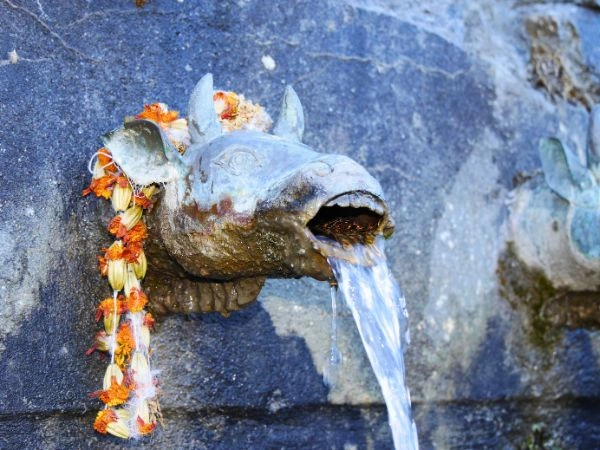
Muktinath is one of most important destinations for Hindu pilgrims and it is also an important place for Buddhists. In the morning, we will visit Muktinath Temple. We can enjoy the magnificent views of Dhaulagiri peak from here. There are water spouts which channel into the stream running above the temple. There is also a Buddhist Monastery nearby.

Our trail descends through the village of Jharkot where we can explore the Jharkot monastery; this is both a Tibetan herbal medical center and an old fortress. We continue our trek back to Jomsom.

The views of the Kaligandaki valley and Kagbeni village along the way are truly overwhelming. We pass by Ekle Bhatti and finally arrive at Jomsom where we can celebrate the completion of the trek with all the trekking staff.

Overnight at a guesthouse - breakfast, lunch and dinner included.

muktinath-1

Early in the morning we will take the return flight to Pokhara. The afternoon can be spent exploring this picturesque lakeside town as your fancy takes you. Overnight at a hotel - breakfast included.

jomsom

Today in the morning, We depart on a tourist bus for a return to Kathmandu. It's a 200 km route that first follows the Marsyangdi River and then the Trishuli River.

 If you want, you may choose to return by a 25-minute flight (not included in the package). Your trek package completes at Kathmandu.

monkey-temple-2
cta
Customize and Book Trip
Embark on a journey of dicovery with us: Index Adventure gives you unforgettable holiday experience.
Customize Trip

Cost Details

Includes

  • 2 Nights at Tourist Standards Hotel in Pokhara with breakfast.
  • Tourist bus Kathmandu-Pokhara-Kathmandu.
  • Flight ticket ( Pokhara-Jomsom-Pokhara) with airport pickup and drop and airport tax included.
  • Private transport from Pokhara bus station to your hotel on the lakeside.
  • Trekking lodge /Teahouse accommodations during the trek.
  • 3 meals a day (Breakfast, Lunch, and Dinner) during the trek.
  • All necessary paperwork and entry permits (ACAP), special Upper Mustang permit, Government tax & official expenses.
  • Government Licensed Holder trekking guide with all his salary, food, drinks, accommodation, transport, and insurance.
  • Porter during the Trekking (1 Potter for 2 trekkers) with all his salary, food, drinks, accommodation, and insurance.
  • Supporter guide group size above 8+ people.
  • Sleeping bag, Down jacket & Duffel Bag (if you do not have your own, to be returned after trip completion).
  • The arrangement of Emergency Helicopter service will be paid for by your Travel insurance company.
  • Exclusive Medical Kit Bag.
  • Farewell Dinner & Trekking Achievement Certificate.

Excludes

  • International airfare.
  • Nepal Visa fee (bring accurate USD cash and two passport photographs).
  • Travel and rescue insurance (necessary).
  • Lunch and Dinner while you are in Kathmandu & Pokhara city.
  • Personal expenses (phone calls, internet, laundry, bar bills, bottle or boiled water & Hot Drinks Tea and Coffee, Hot Shower, Batteries charge, Heater during the Trek, and Sweet things like dessert).
  • Extra night accommodation and meals if early departure from the mountain.
  • Tips for the guide, porter. (Tipping is voluntary).
  • Any other expenses which are not mentioned in including the section

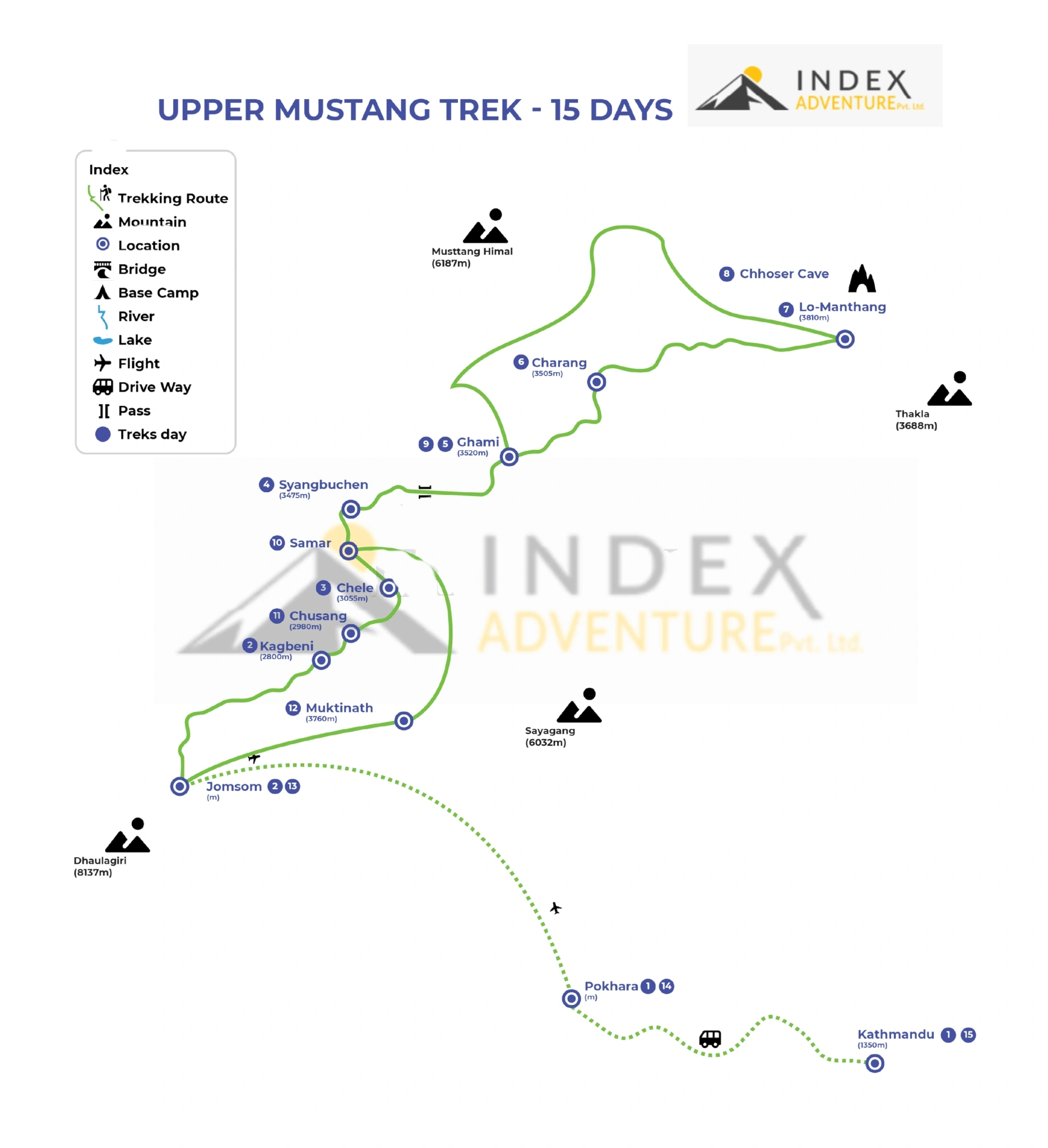
Upper Mustang Trek - 15 Days Route Map

Upper mustang Trek Map

Essential Information

Upper Mustang Nepal Weather and Climate: Complete Seasonal Guide

Mustang sits in the rain shadow of the Annapurna and Dhaulagiri ranges, which makes its climate unlike anywhere else in Nepal. The region experiences a trans-Himalayan climate that is primarily cool, semi-arid, and consistently windy.

While the rest of Nepal receives heavy monsoon rainfall from June through August, Upper Mustang stays remarkably dry throughout that period. That single geographic fact is what makes Mustang a viable trekking destination year-round in ways that most other Himalayan regions simply are not.

Temperatures shift dramatically depending on altitude. Upper Mustang, including Lo Manthang at 3,840 meters, runs significantly colder than Lower Mustang villages like Jomsom and Kagbeni. Understanding that distinction helps you pack correctly and set realistic expectations for each section of the route.


Seasonal Temperature Breakdown for Mustang Nepal

Season Months Daytime Temp Nighttime Temp Conditions
Spring March to May 10°C to 20°C -5°C to 5°C Clear skies, blooming flora, strong afternoon winds
Summer June to August 15°C to 25°C 5°C to 10°C Warm and dry in Upper Mustang; Lower Mustang can see some rain
Autumn September to November 5°C to 20°C -10°C to 0°C Peak trekking season with crystal clear mountain views
Winter December to February -5°C to 10°C -20°C to -10°C Harsh cold, heavy snowfall, many locals migrate south

Regional Climate Differences Between Upper and Lower Mustang

Upper Mustang (High Altitude Desert)

Upper Mustang behaves more like a high-altitude Tibetan plateau than a typical Himalayan trekking region. The landscape is arid, exposed, and dominated by extreme dryness and powerful winds, particularly during afternoon hours. Winter nights regularly drop below -20°C in elevated sections of the route. Trekkers moving through Lo Manthang and the villages surrounding it should prepare for temperature swings of 25 to 30 degrees Celsius between midday and midnight during autumn and winter.

Lower Mustang (More Accessible Year-Round)

Lower Mustang is noticeably warmer and more forgiving across all seasons. In June, daytime temperatures in Jomsom and Kagbeni can climb as high as 30°C, making midday trekking genuinely warm. Winter nights are cold but considerably less severe than conditions in the upper region. The lower elevation, combined with better infrastructure and more established teahouse facilities, makes this section accessible to a wider range of trekkers throughout the year.


Best Season to Trek in Mustang Nepal | Upper Mustang Best Time to visit

  • Spring (March to May) is one of the two primary trekking windows. Skies are clear, temperatures are manageable, and the landscape shows the first signs of life after winter. Afternoon winds strengthen as the season progresses, so starting trekking days early is consistently good practice. This is also one of the best seasons for photography given the visibility and light quality.
  • Summer (June to August) is where Upper Mustang genuinely distinguishes itself from every other trekking region in Nepal. While monsoon rains shut down most Himalayan trails, the rain shadow effect keeps Upper Mustang dry and accessible. The landscape turns relatively green in lower sections while the upper region retains its characteristic arid character. This is peak season for Upper Mustang specifically, and teahouses fill quickly during this window.
  • Autumn (September to November) is the most popular trekking season across all of Nepal, and Mustang is no exception. The post-monsoon clarity delivers some of the sharpest mountain views of the year. Temperatures are stable, trail conditions are reliable, and the cultural calendar features some of the most significant local festivals. Book accommodation and restricted area permits well in advance for autumn trekking.
  • Winter (December to February) is the most demanding season in Mustang. Upper Mustang becomes genuinely harsh, with heavy snowfall blocking certain passes and many local families migrating south to lower elevations. Some teahouses close entirely during this period. Lower Mustang remains accessible and offers a quiet, uncrowded trekking experience for those prepared for cold conditions and limited facilities.

Can I trek the upper Mustang in the summer?

Yes, you can also go on the Upper Mustang Trek during summer. Upper Mustang lies in the rain shadows of the Annapurna range, so summer treks are pleasant, well-lit, and dry. The weather is perfect, and the trails are in superb condition, with warm and sunny days and stunning visibility. The region's Rivers and ecosystem are at their peak during this season. Even though you may encounter some damp weather in the Lower Mustang, making the trails slippery and muddy, the natural beauty is enhanced.


What to Expect in a Teahouse on the Upper Mustang Trek

Before you set foot on the Upper Mustang Trek, knowing what teahouses actually offer saves you from unnecessary surprises at altitude. A teahouse is essentially a family-run mountain guesthouse. It gives trekkers a bed, a hot meal, and a warm dining room to rest in after a long day on the trail. Simple, functional, and deeply local. That is what you are signing up for, and honestly, it is part of what makes this trek so memorable.

Teahouses across Upper Mustang vary by village size and location. Larger villages like Kagbeni and Lo Manthang offer noticeably better facilities than remote stops like Geling or Samar. Understanding that gradient before you go helps you pack right and set realistic expectations for each night along the route.


Rooms in Upper Mustang Teahouses

Rooms are basic. Twin beds with simple bedding are the standard setup throughout the route. Blankets are provided at every teahouse, but they are often not thick enough for the cold nights at 3,800 meters and above. Carrying your own sleeping bag is not optional on this trek. It is genuinely necessary.

Private rooms are available in larger villages but become limited the further you move into restricted Upper Mustang territory. In remote areas, sharing a room is perfectly normal and widely accepted among trekkers. During peak season, solo room requests are unlikely to be accommodated.

A few practical details worth knowing. Rooms frequently have small gaps in windows or walls, which lets cold air in during the night. Bringing earplugs and a warm thermal liner adds meaningful comfort. Charging ports are rarely available inside rooms. Common dining areas usually have a few shared sockets, often solar-powered, and most teahouses charge a small fee for electricity use. A power bank is one of the most useful items you can carry on this trek.


Toilets and Showers

Most teahouse toilets are squat-style and shared between multiple rooms. Western-style toilet options exist in larger villages, particularly in Lo Manthang, but they are not the norm. Toilet paper and hand sanitizer are rarely provided. Carrying your own supply of both is essential throughout the route.

Hot showers are available at many teahouses but always come at an extra cost, typically between NPR 300 and 500 per use. In more remote villages, a bucket of hot water replaces a proper shower entirely. This is worth factoring into your daily budget. Budget roughly USD 20 to 40 per day for food and accommodation combined, with shower costs sitting on top of that in most cases.


Food and Meals at Upper Mustang Teahouses

Meals are fresh, hearty, and locally sourced. The standard teahouse menu across Upper Mustang features dal bhat, noodles, momo, fried rice, Tibetan bread, and soup. Dal bhat is the most recommended option throughout the trek. Many teahouses offer free refills, it is nutritious, filling, and genuinely well-suited to the energy demands of long trekking days at altitude.

Breakfast options typically include Tibetan bread with jam or honey, porridge, pancakes, chapati, boiled eggs, and tea. Black tea, milk tea, ginger tea, and the distinctly Tibetan salty butter tea are available at every stop. The salty butter tea is worth trying at least once. Think of it as a warm, savory soup rather than a conventional tea and it makes a lot more sense.

Coffee, hot chocolate, and soft drinks are also available. Alcohol is sold at some teahouses, though drinking at altitude is worth approaching with considerable caution given its effect on acclimatization.

Teahouses in lower villages like Jomsom and Kagbeni carry more extensive menus due to higher trekker volume. Moving deeper into Upper Mustang, menus shift toward Tibetan-influenced dishes with fewer Western options. Food prices rise consistently with altitude. Budget accordingly as you gain elevation.

Avoid meat in remote sections of the trail. Refrigeration is minimal in these areas and meat is transported long distances before it reaches your plate. Stick to vegetarian meals beyond Kagbeni. Your stomach will thank you at altitude.

Meals are served in a communal dining area at set times. Breakfast is generally available between 7 and 8 in the morning. Lunch runs from roughly noon to 1 PM. Dinner is served between 6 and 7 in the evening. If you have a particularly long trekking day ahead, ask the teahouse the night before to prepare a packed lunch. Most will put together boiled eggs, chapati, or fried rice without any difficulty.


Heating in Upper Mustang Teahouses

This is one area where trekkers are consistently caught off guard. Bedrooms are not heated. Expect cold nights at every elevation above Kagbeni. The only heated space in any teahouse is the central dining room, and that heat typically comes from a wood or yak dung stove that is only lit during the evening.

Carry a thermos or insulated water bottle. Water left in a standard bottle overnight at high altitude will be frozen by morning. Layers are not optional at night. Wear them to sleep.


Electricity, WiFi, and Connectivity

Solar panels power most teahouses throughout Upper Mustang. Electricity for device charging is available in the common dining area at many lodges, usually during the evening hours and for a small additional fee. Do not assume charging is free or always available in smaller villages. A fully charged power bank before each major leg of the trek removes that dependency entirely.

WiFi exists in certain teahouses in larger villages. It is slow, intermittent, and not something to plan around. Cellular signal is limited across much of the route. Inform your contacts at home to expect communication gaps.


Water Safety at Upper Mustang Teahouses

Boiled water is available at most teahouses for a small charge. This is a far better option than buying plastic bottles, which creates unnecessary waste in a fragile and remote environment. Carrying personal water purification tablets or a LifeStraw filter is a practical and environmentally responsible choice throughout the trek.

Raw vegetables should be avoided. Drink only boiled, bottled, or personally purified water. Wash hands with sanitizer before every meal. These are straightforward habits that prevent the kind of digestive trouble that can derail a trek in a region with extremely limited medical access.


Pro Tips for Staying Comfortable in Upper Mustang Teahouses

Start trekking early each morning. Afternoon winds in Mustang are powerful and relentless, and getting your daily distance covered before they peak makes a real difference to both comfort and energy levels.

Carry a headlamp with spare batteries. Power outages are common throughout the trek. Carry small denomination Nepali rupee notes specifically for showers, WiFi, electricity charges, and snacks. There are no ATMs anywhere on the Upper Mustang trail. Withdraw enough cash in Pokhara or Jomsom before the trek begins.

Be respectful toward teahouse owners and staff. These are family-run operations in one of the most remote and culturally significant regions of Nepal. Simple courtesy goes a long way, and the warmth you receive in return is one of the genuinely memorable dimensions of trekking in Upper Mustang.


Should You Book Teahouses in Advance?

Advance booking is not always essential on this route. But during peak trekking seasons in spring and autumn, and particularly in high-demand villages like Lo Manthang, reserving ahead removes unnecessary end-of-day stress. Index Adventure handles all accommodation bookings and restricted area permits as part of the trekking package, ensuring you arrive at each stop with a confirmed room rather than hoping for availability after a long day on the trail.


Upper Mustang Trek Difficulty Level: What Every Trekker Should Know Before Going

Planning your Upper Mustang Trek? Understanding the difficulty level upfront is one of the smartest things you can do. This is a moderately difficult trek, not a technical climb, but not a casual walk either. The high-altitude arid terrain, persistent winds, and remote location create a specific set of challenges that average fitness levels can handle with proper preparation.

The standard itinerary runs 14 to 18 days. You will walk 5 to 7 hours daily, mostly on dry, rocky, unlevelled ground between 3,800 and 3,950 meters above sea level.


Key Factors That Affect Upper Mustang Trek Difficulty

Altitude The trail reaches around 3,800 to 3,950 meters through most of its upper sections. Lo Manthang, the historic walled capital, sits at 3,840 meters. Spending multiple nights at this elevation means your body needs time to acclimatize properly. Skipping rest days here is one of the most common mistakes trekkers make.

Terrain and Climate Upper Mustang looks nothing like the green Annapurna or Everest trails. The landscape is arid, rocky, and sun-baked during the day, then cold at night. Strong afternoon winds carrying fine dust are a daily reality, not an occasional inconvenience. Trekkers who have only hiked greener Himalayan routes often underestimate this specific environment.

Daily Walking Hours Five to seven hours of walking per day on exposed, irregular ground is genuinely taxing, especially as days accumulate. The fatigue is cumulative, and pacing matters more than raw fitness.

Remoteness Tea houses are available throughout the route. But medical facilities are extremely limited. The nearest serious medical infrastructure is hours away under good conditions. This reality alone justifies booking with an experienced, licensed local operator like Index Adventure.


High-Risk Zones on the Upper Mustang Trek

Knowing where the route gets genuinely demanding helps you stay alert at the right moments.

  • Chele at 3,050 meters marks the start of steep climbs and the formal entry into high-altitude terrain. Acclimatization monitoring begins here.
  • Syangboche at 3,800 meters is where mild acute mountain sickness becomes a realistic risk for trekkers who have ascended too quickly.
  • Nyi La Pass at 4,010 meters is one of the highest points on the entire route. It is windy, exposed, and physically demanding. Afternoon crossings are particularly brutal due to intensified wind speeds.
  • Lo Manthang at 3,840 meters requires sustained attention to how your body is responding. Most itineraries stay here for two nights. The cumulative effect of consecutive high-altitude sleep affects trekkers more than single-night stays do.
  • Ghar Gompa Route at approximately 4,200 meters is the most remote and technically demanding section. Trails are steep, terrain is unstable in places, and emergency access is significantly limited.
  • Dhakmar at 3,820 meters presents rugged conditions with trail erosion risk, particularly relevant if you are trekking outside the recommended dry season window.

Introduction to Upper Mustang – A Journey to a Forbidden Kingdom

Embark your journey to a remote place untouched by any kind of modernization. You will experience the life that is similar to the civilization back in the time. The centuries back practice, lifestyle and customs are still prevalent in the Mustang region of Nepal. Lying beyond the mountains, Mustang is regarded as the forbidden kingdom and this part of the country is beyond any control and influence of the administrative centre of the nation. If you love adventure and want to see the centuries back lifestyle now in present time then Upper Mustang Trek is a suitable journey for you.


Landscape and Climate – The Desert of the Himalayas

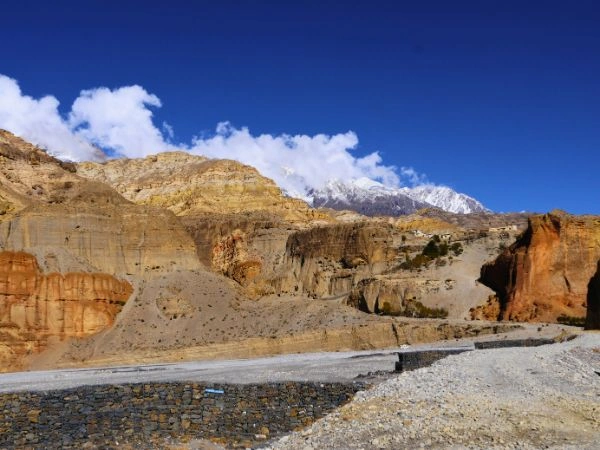
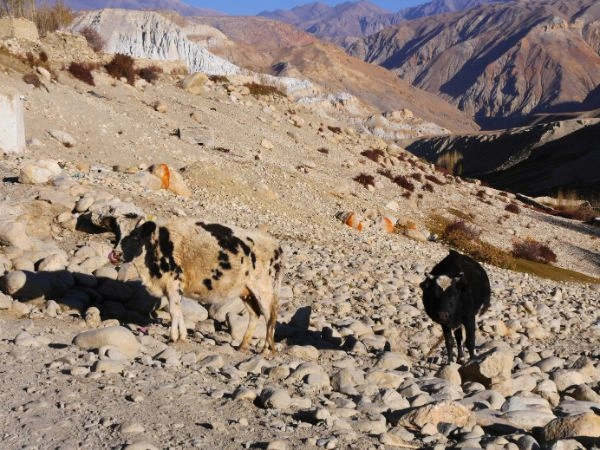
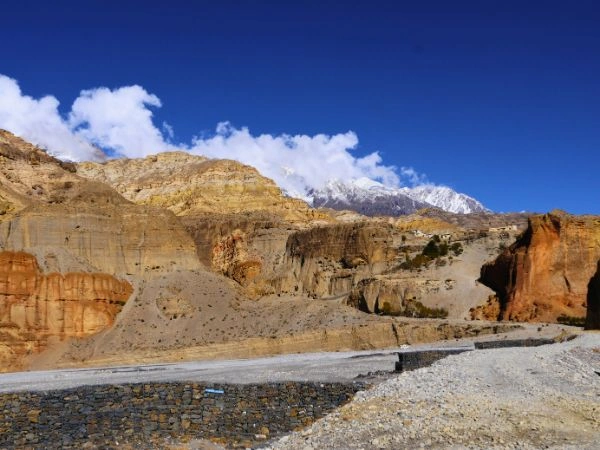
The land of Mustang is dry and barren as it receives very less rainfall. The exoticness of this place is beyond any word of description. The land is similar to that of the Tibetan plateaus – dry, barren and arid. The desert like landscape doesn’t possess any kind of vegetation except few plants that grow in dry places. The village of Mustang is alluring and captivating. The high walls with the views of rigid mountains in the background, it nothing less than a picturesque portrait.


Culture and Hidden Treasures – Monasteries, Caves, and Local Life

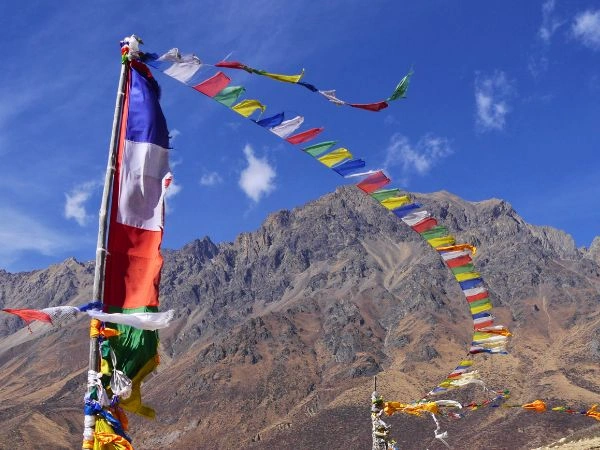
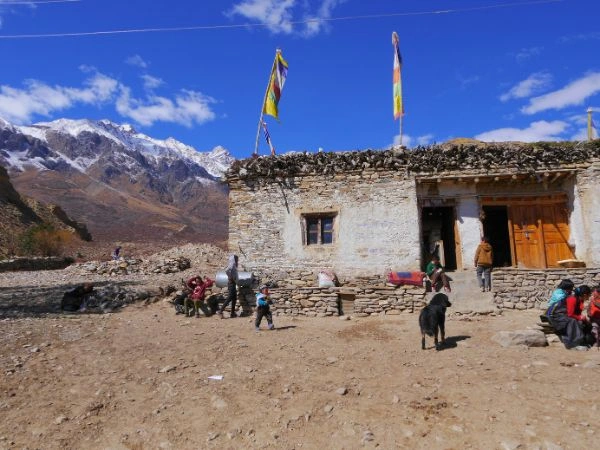
Upper Mustang Trek is like a treasure hunt where you travel to the mysterious places. The desert-like landscape will haunt you, but the hidden caves and artistic monasteries built there is like a reward for your hard work and endurance capacity to spend your time in such a remote place. As you follow your trail, you will come across the Gompas, prayer flags and monasteries which is an evidence to the Tibetan Buddhist culture prevalent in this place. The local people residing in this region are the Lobas. These people follow Buddhism and regard themselves as the descendants to Tibet.


Accessibility and Trek Difficulty – A True Adventure Experience

Taking about the accessibility to this region, it is the less travelled part of Nepal. The people living here follow a lifestyle that we hear in the books and televisions some centuries back. Therefore, you can analyse how remote and secluded this region is. As the region is dry and barren, it is prone to windy storms in the afternoon and trekking in this region is beyond moderate. You must have good endurance capacity and compromising habit when it comes to food and accommodation. If you chooses, Upper Mustang Trek as your travel package, then you are a true adventure seeker who would like to give a new taste to your travel stories.


Upper Mustang Trek: A Journey to the Hidden Kingdom

Nepal, a country with diverse landscapes and cultural heritage, is a hub for adventure tourism. Among the various trekking destinations in Nepal, the Upper Mustang Trek is gaining popularity among trekkers from all around the world. The Upper Mustang region, also known as the hidden kingdom of Lo, is located in the western part of Nepal, bordered by Tibet. This remote and isolated region was once an independent kingdom, and its history dates back to the 15th century. Today, this region is famous for its unique landscapes, ancient Buddhist monasteries, and cultural significance.


Geography of Mustang

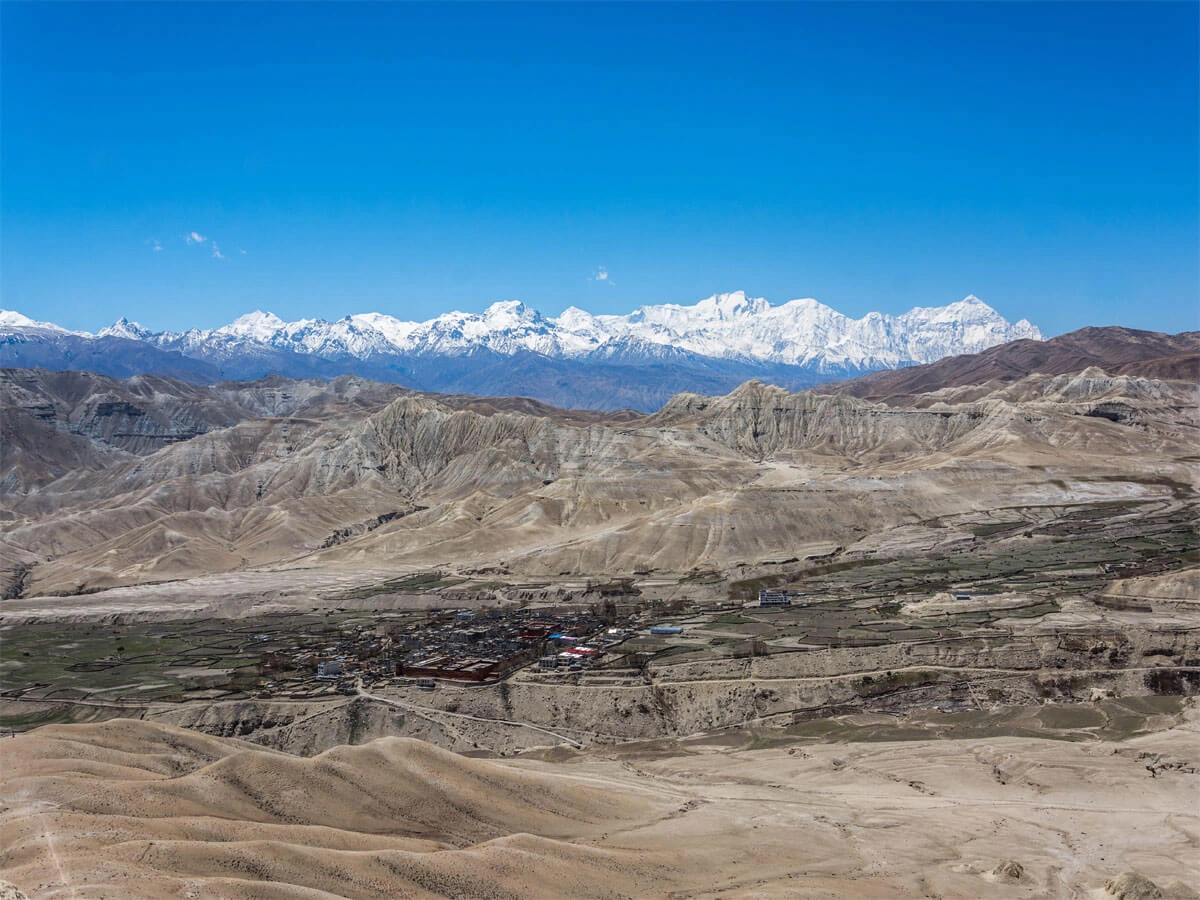
The Trans-Himalayan area of Nepal includes the Mustang region, which borders Tibet. The region is characterized by its arid and rugged terrain and its unique geography that includes deep gorges, high cliffs, and barren plateaus. The Kali Gandaki River, one of the major rivers in Nepal, flows through the region and has carved out the deepest gorge in the world. The region is also home to several peaks over 6,000 meters, including Dhaulagiri, Nilgiri, and Annapurna. Little rainfall and strong winds define the climate in the Mustang region, making it desert-like. The region is known for its clear blue skies and stunning views of the Himalayan range.

The Upper Mustang Trek is a distinct adventure that provides hikers with a wide range of enjoyment. Here are some of the highlights of the Mustang Trek:

  • Lo Manthang: One of the trek's main highlights is Lo Manthang, the region's capital. The city is home to the Mustang Royal family and is known for its ancient monasteries and temples.
  • Tiji Festival: The Tiji Festival is a major cultural event in the Mustang region and is held every year in May. Colorful parades, traditional dances, and musical performances mark the event, which celebrates the overcoming of virtue over evil.
  • Kagbeni: Kagbeni is a traditional village that is situated at the entrance of the Mustang region. The village is well-known for its distinctive customs and historic structures.
  • Kali Gandaki Gorge: The journey's main attraction, the Kali Gandaki Gorge is the world's deepest Gorge. Over 5,000 meters deep, the gorge provides amazing views of the Himalayan range.
  • Ghami: Ghami is a traditional village that is situated on a hilltop and offers stunning views of the surrounding valley. The little village is renowned for its old structures and unique lifestyles.
  • Muktinath: Muktinath is a significant Buddhist and Hindu pilgrimage place. The site is home to a temple that is dedicated to Lord Vishnu and is believed to be one of the 108 sacred places for Hindus.
  • Dhakmar: Dhakmar is a traditional village that is known for its unique red cliffs and its ancient monasteries. Visitors have the chance to learn about the unique culture of the Mustang region.
  • Chosar: Chosar is a little town well-known for its prehistoric cave habitations. The caves are made around 2,000 years back and have historical significance.
  • Charang: Charang is a traditional village that is known for its ancient architecture and its unique cultural traditions. The village is home to an ancient monastery that is of great significance to Buddhist pilgrims.
  • The Forbidden Kingdom: The Mustang region was once a forbidden kingdom and remained isolated from the rest of Nepal for many years. The territory, which is sometimes referred to as the "forbidden kingdom," protects its diversified cultural and historical significance.
  • Ancient Monasteries: The Mustang region is home to several ancient monasteries that are of great significance to Buddhist pilgrims. The monasteries offer visitors a chance to experience the unique culture and history of the Mustang region.
  • Ancient Trade Route: An major trading corridor for goods between Tibet and India historically existed in the Mustang area. The ancient trade route is still visible in the region and offers visitors a chance to experience the history and culture of the Mustang region.
  • Nomadic Culture: The Mustang region is home to several nomadic communities that still practice their traditional way of life. The localities are recognized for their rich artistic heritage and their kind welcome.
  • Unique Plants and Animals: There are different particular types of vegetation that must be tracked down in the Mustang locale. The region is well-known for its unique biodiversity and rugged terrain.
  • Snow-Capped Peaks: The Mustang region is surrounded by several snow-capped peaks, including Dhaulagiri, Nilgiri, and Annapurna. The region offers stunning views of the Himalayan range and is a major highlight of the trek.
  • Traditional Villages: The Mustang region is home to several traditional villages that offer visitors a chance to experience the unique culture and history of the region. The villages are known for their ancient architecture and their unique cultural traditions.
  • Ancient Caves: The Mustang region is home to several ancient caves that are of great historical significance. The caves are believed to be over 2,000 years old and offer visitors a chance to experience the unique history and culture of the Mustang region.
  • Local Cuisine: The Mustang region is known for its unique cuisine, which is a blend of Tibetan and Nepali cuisines. The cuisine is heavily influenced by the region's history and culture and also is a major highlight of the trek.
  • Warm Hospitality: The people of Mustang are known for their warm hospitality and their unique cultural traditions. Visitors to the region can experience the unique culture and history of the region through the eyes of the locals.
  • Off-the-Beaten-Path: The Upper Mustang Trek is a unique trekking destination that offers visitors a chance to explore a region that is still relatively untouched by mass tourism. The trek offers a unique and off-the-beaten-path experience that is hard to find in other trekking destinations.
FAQs for Upper Mustang Trek - 15 Days

  • Private Guide + Porter
  • Private Guide + No Porter
  • Porter-Guide (Combined Person)
  • Small Group Trek with Guide + Porter or Yaks

Tips are highly expected by every porters and guides whom you go with. It is nice and acceptable way of saying thank you for their support and help during your whole journey. Normally, we suggest to tip around 10-20% of total trip cost. And, they feel happy when you pay tip in Nepali rupees because they felt difficulties to exchange while you pay them in your currencies.

Nepal Standard Time (NPT) is the standard time zone for Nepal. With a time offset from Coordinated Universal Time (UTC) of +5:45 all over Nepal, it is one of only three time zones with a 45-minute offset from UTC.16.

You will find good toilet facilities in the lodges and hotels and you will get to shower and wash your hair in hotels/lodges where you will stay. Our tour leader will orient you about all thinks when you reach here in detail too.

Our representative will be there at airport to receive you with your nameplate who will carry your luggage and place it to private vehicle and then he/she will drop you to the booked hotel where your tour leader will be waiting you for a meet. And, also be aware that when you proceed out of the Airport, some Nepali carriers might try to help you to carry your luggage, and ask you for a tip. So you need to say 'Not needed' and wait to find our representative.

You can book the trip through our website, phone, or via email. It is always a good idea to book your trip in advance because some of trekking regions we need reserved the domestic flight and we accommodate last minute bookings also even you arrive and want to organize.

About the payments terms you need to pay 20% of total price as advance deposit to confirm reservation before arrive to Nepal after remaining balance of the payment shall be paid when you arrive to Kathmandu.

Normally, you should bring extra money for alcoholic and soft drinks, hot shower, tipping for staffs and shopping around the trek. We suggest to you bringing $ 250 to $ 300 Dollars which  you can change in different currencies converting outlets. In Kathmandu and Pokhara cities you can withdraw Nepali rupees from ATM’s Booths too, credit cards can be used to purchase expensive items but there is additional Charge for this service. Undeniably, Kathmandu city is the shopper’s paradise. One can treasure trove the real work of art and memento. Some of the most prevalent things that foreigners usually shop in Nepal are weaved garments, Tibetan carpets, pottery, mask and manikins, statues, Khukuri (traditional knife), and Thanka paintings.

Everything relies upon the time and elevation of your trek. However, if you are trekking on higher elevations, you should carry with yourself a down jacket and a pair of warm clothes. In other occasions, carry trekking jeans and shorts, sleeping bag, a pair of trekking boots, and camera and gears that you may require. Counsel a checklist of clothing and gears on our site, but remember to pack light clothes & gears. Normally, you need to carry a small day pack where you can put your light water proof jacket, 1 liter water bottle, sunglasses, cap/hat, your personal medicine and some money. A porter will carry your luggage, and you should pack your clothes and sleeping bag on plastics and keep into your rucksack which should be below 12 KG/25 pounds.  In long days trek your luggage will kept back to hotel where you will came back after your trek.

Normally you can purchase SIM cards to use in your smart mobile phones in Kathmandu, Pokhara and other major cities too. To purchase SIM cards you need to provide a passport size photo and copy of your passport. It cost you very cheap to purchase such SIM cards.

Normally, all hotels and restaurants in city grant access to free internet services to their guests.Since you will be in the mountainous region, Wi-Fi might not work everywhere or for many days. However, most of the guesthouses offer Wi-Fi for free or for a little charge. It is better not to rely on the internet and enjoy your trip. Else, you can use mobile internet after acquiring a Nepalese SIM cards like 'NTC SIM Cards' or 'NCELL SIM cards',in mountains until you get signal of Cello phone.

Yes! It is highly recommended to get a travel insurance before travelling to Nepal. Most of the travel insurance covers your emergency flights, medical expenses, and theft or loss of possessions but in the mean time while you are trekking in Nepal you should buy mountain helicopter evacuation insurance up 5500 m. We suggest you to buy insurance policy in your country because we don’t have mountain rescue insurance here in Nepal.

There is high chances of getting altitude sickness while trekking above 3000m but there will be no worry because you will be taken care responsibly. Our guides are trained enough to handle this kind of situationIf the situation is harsh then guides promptly, moves you to a lower elevation first, and will be given medical aid as the quick treatment to recover. In case of emergencies the guide will take immediately action transfer to the nearby hospital utilizing your travel insurance. Remember to keep calm during such situations, also trust your guide, who is also trained in first aid.

Our Guides carry a Normal medicine & emergency First Aid Kit. But “Prevention is always better than cure”, so it is always a good idea to bring your personal medicines along with you when you come to Nepal. Despite the fact that there are numerous drug stores in Kathmandu, Chitwan, and Pokhara, and major cities of Nepal. It is highly suggested to carry some essential restorative stuff like insect repellent, sunscreen, lip balm, eye drops, and swathes etc.

Firstly, Nepal is referred as one of the safest countries in the world, so Nepal indeed is safe for solo female Trekkers as well. Besides, while you're on one of our treks, we assume individual liability for your prosperity, a responsibility we regard genuinely.

Nepal is the safest place to travel. Nepal lies in the safest place or destination for every foreigners who wants to travel Nepal. Travelers needs to fallow basic rules so that they can explore the Nepal freely. A reputed and legally register travel company used to organize and manage your whole trip. So there will be no any problem during your visit. During your long trip there will be one Nepali Guide with you and he/she will handle your all issues and tells you do's and don'ts during your visit. Some of the basic rules are listed below.

  • Do not trek alone.
  • Do not display your cash and expensive items.
  • Ask your immediate queries with us and our representatives.
  • Have your travel insurance and leave a copy to us.
  • Leave a copy of your passports and other important document to us.
  • Don’t hesitate to ask any questions to your travel planner and your travel partner.

We are here to support you to make your travel memorable. You should fully believe on us.

If you are travelling through air then you can only enter Nepal through Tribhuvan International Airport; is the only international airport in Nepal that operates several international flights on a daily basis. The airport is located in the capital city: Kathmandu, which is a popular hub for tourists visiting Nepal.

If you are travelling through road ways then you can either enter from China Border and India Boarder but before entering Nepal you should report yourself to Nepal Entry/Exit Points. Some of road entry/exit points are:

From China: Rasuwagadi Border & Kodari Border.

From India: Dhangadi, Kanchanpur, Nepalgunj, Birgunj, Kakarvitta, Bhairahawa

Reference: http://nepalimmigration.gov.np/content/immigration-offices--entry--exit-points-1.html

If you want to make your trip considerably comfortable and hassle free, you ought to hire a porter or a guide. A porter will carry your belongings while a guide will lead you to your destination conveniently, and they aid you in any kind of emergency, so it would be an ideal decision to take a guide with you.

Since there are numerous restaurants serving vegetarian foods in Nepal, there is no problem in being a veggie lover. You can easily get vegetarian food even when you enter normal restaurants.

The meals and water available in lodges and camps are hygienic enough while trekking in Nepal.The predominant daily food of people in Nepal is lentil soup and curried vegetables with rice, typically called "Daal, Bhat,Tarkari” in Nepali. You might find the curries often spicy and oily which might bring out stomach problems to the foreigners.  Along the Trekking trail will be simple, mix of local and international cuisine.Hence, we would suggest you to stick with normal, less spicy food. Another thing that one ought to know about while visiting Nepal is to drink packaged mineral water unless you are sure that the water is boiled, filtered or you can refine with water medicine tablets.

Tea house trekking refers to a trek where all your accommodation and meals are organized in a lodge/house with subtle services.

Camping trekking is a trekking where we furnish you with tent settlement and full board with dinners to be cooked by proficient trekking cook in a versatile camp, outfitted with a kitchen and with satisfactory care staff of kitchen assistants, aides and porters.

The duration of your trek and the choice of the destination determines the difficulty and length. Generally, the duration lies from a minimum of 5 days to a maximum of 30 days or even more. This relies upon the Trekking route that you've chosen however; normally we will be walking close to five to six hours per day. There are different types of trekking grading from easy, moderate and changeling.

One must possess a moderate level of physical fitness, past hiking experience, should not retain any chronic or subtle health issues especially in leg functions, and must be able to mentally adjust for multi-day treks in the remote areas. If you match all of the above criteria, then you are ready to trekking Nepal.

This relies upon where you go and in which season you travel. Nepal has 3 different regions for climate where Himalayan region is mild cold in summer and freezing cold in winter, in Hilly region all whole year climate is suitable for travel but in Terai region the summer is very hot and in winter is too cold.Weather in the Himalayan region is unpredictable. Around the morning, evening and night, it normally gets cold yet the days are warm. Winter (December to February) will be bit colder however the days will still be very delightful and comfortably warm if the sun is out. There might be some snowfall during the winter in high elevation places. You should always carry some warm clothes while trekking in the higher elevations, whatever the season.

You will be able to do all these activities in Nepal, yet they completely differ from each other. Trekking is a multi-day walk where you stop at various destinations along the trail. Generally, hiking refers to one day walk up from 2 hours to eight hours which might be a one or two day event. Mountain climbing is an adventurous activity which requires special gears and training, and is more risky than that of trekking and hiking as you climb the summit of mountain peak.

Trekking in Nepal can be done anytimeof the year, except for monsoon. During monsoon (June-August), trekking becomes a bit difficult due to heavy rainfall and unpredictable weather. However, the best time of the year for trekking in Nepal lasts from month of March-May (Spring Season) and September-November (Autumn Season).

Upon your arrival, you can exchange your currencies at Tribhuvan International Airport but it might be low rate than other exchange places. However, banks do accept other countries' currencies too. All major banks of Nepal provide currency exchange services. Or the other option might be, exchanging your currency with the licensed money exchangers in major citieslike Kathmandu & Pokhara and mostof the commercial banks have ATM machines in major cities and towns of Nepal like Kathmandu and Pokhara where you will be able to withdraw money from your home country bank using your ATM card.

Yes! Nepal is the safest country for the travelers around the world. 

Yes! Except for the citizens of India, you need to get yourself a Nepalese visa to enter the territory of Nepal. If you are an Indian citizen a valid identity would be enough to enter Nepal via the entry points.

Nepalese visa is easily available upon your arrival at any entry points (ref Q.N 1). Yes, you can get on arrival tourist Visa at Tribhuvan International Airport in Kathmandu there are some countries visa will needed $ 25 for 15 days, $ 40 for 30 days and $100 for 90 days tourist visa from the dates of issue.For Tourist Visa, you need to bring along your valid passport ( must be valid up to 6 months ,just in case extra photocopies of passport ) and few copies of passport sized photograph.

You can apply online visa also. https://online.nepalimmigration.gov.np/

Necessary Documents to bring/carrywhile traveling in Nepal are:

  • Copy of your travel insurance,
  • Emergency contact numbers of insurance agent and family members/friends
  • Immediate cash and
  • And any special medicine.

Note: The resident of countries like Nigeria, Ghana, Afghanistan, Zimbabwe, Somalia, Cameroon, Swaziland, Iraq, Ethiopia, Liberia, Palestine do not get visa in the entry point of Nepal.

What Our Guests Say?

Great Costumer services

We experienced excellent costumer service by this company .in Kathmandu there are tons of adventure companies to choose but it can be hard to differentiate but we did this one certainly. The trip was incredible and at any moment if I needed to contact Keshab...

read more +
B
Ben Melville - Australia
June 20, 2018
At good hands

Imagine crossing three high passes, all above 5,000 meters, and also setting foot on Everest Base Camp that too with the assistance of those who know. This happened to me this year. The going was tough, but we kept going with faith in the expertise...

read more +
C
Carbani Wood - India
October 01, 2017

You May Also Like

Kanchenjunga Trekking

Kanchenjunga Trekking - 28 Days

28 Days
Price From
US$2475
Summer Tour
Jeep Drive Tour to Upper Mustang

Jeep Drive Tour to Upper Mustang

10 Days
Price From
US$2200US$2300
Manaslu Circuit Trek

Manaslu Circuit Trek – 15 Days

15 Days
6 reviews
Price From
US$1085
Need Help? Call Us+977 9851167996