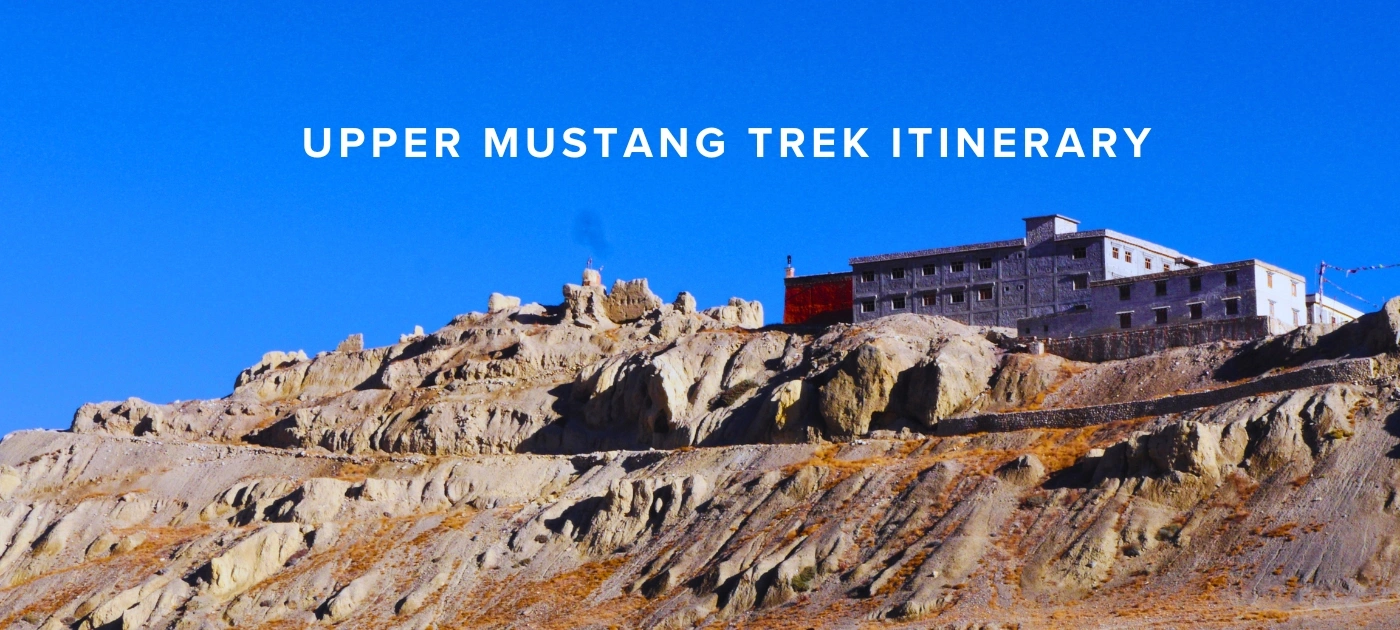
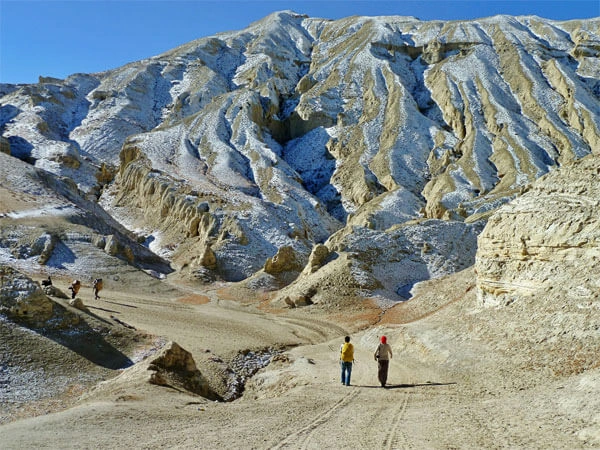
If you have been searching for a trek that genuinely feels like stepping into another world, the Upper Mustang trek itinerary is what you are looking for. This is not your typical mountain trail with teahouses every few kilometers and crowds at the viewpoints. It is a journey through an ancient kingdom, walled cities, sky caves, wind-carved red cliffs, and Buddhist monasteries that have been standing for centuries. Honestly, no photograph quite prepares you for it.
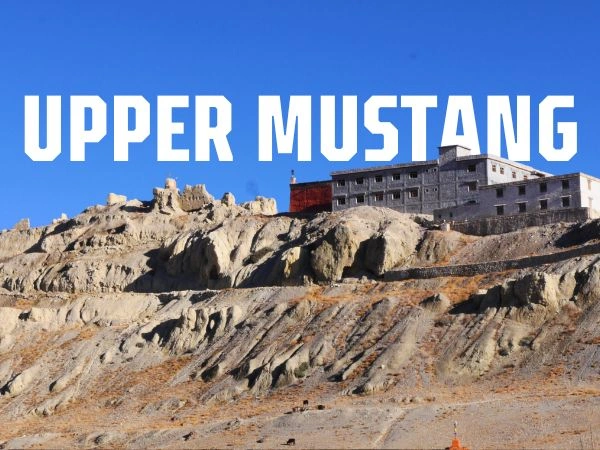
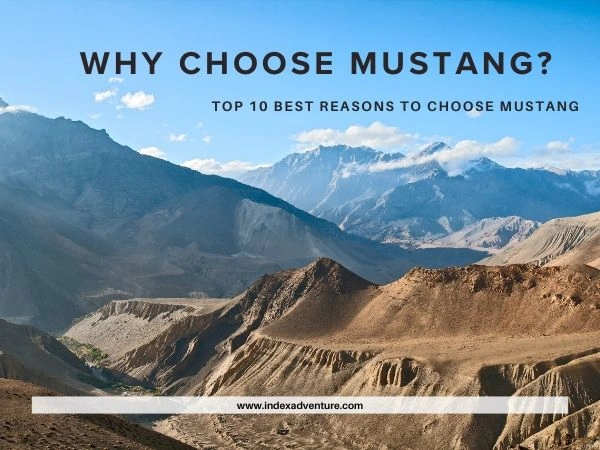
The Upper Mustang trek route sits in northern Nepal, tucked behind the Annapurna and Dhaulagiri ranges in a high-altitude rain shadow that keeps it dry even during monsoon season. The landscape looks almost nothing like the rest of Nepal. Think ochre desert canyons, sparse villages, and terrain that feels closer to Tibet than to the green Himalayan valleys most trekkers associate with Nepal. Lo Manthang, the walled medieval capital of the ancient Kingdom of Lo, sits at the heart of it all at approximately 3,810 meters.
This upper mustang travel route guide covers everything you need to plan your journey properly, from the step-by-step daily itinerary and permit requirements to cost breakdowns, best time guidance, and honest advice on what the trek actually demands physically. Index Adventure has been guiding trekkers through this route for over two decades, and this guide reflects what we know genuinely works.
Upper Mustang Itinerary Overview
Upper Mustang is a restricted trekking zone in northern Nepal that was closed to foreign visitors entirely until 1992. Even after opening, visitor numbers have been deliberately controlled through a special Restricted Area Permit system. That controlled access is a primary reason the region has retained the cultural authenticity and environmental integrity that make it so remarkable.
The mustang region trek route passes through landscapes that shift dramatically over each trekking day, from the relatively green Kali Gandaki valley near Jomsom through increasingly arid and otherworldly terrain as you push north toward Lo Manthang. Ancient monasteries appear at intervals that remind you this was a thriving cultural civilization long before the modern trekking industry arrived in Nepal.
The Annapurna conservation area trek plan includes the entire Mustang district, so ACAP permits are required alongside the specialized Restricted Area Permit. Index Adventure handles all permit logistics for clients as part of every Upper Mustang itinerary package.
How Many Days for the Upper Mustang Trek Itinerary?
This is one of the most common questions trekkers ask when beginning to plan, and the honest answer is that the right duration depends significantly on what you want from the experience.
| Trek Duration |
What Is Covered |
Recommended For |
| Upper Mustang trek itinerary 5 days |
Jomsom to Kagbeni and back only |
Not recommended for first-timers |
| Upper Mustang trek itinerary 7 days |
Jomsom to Lo Manthang with shortcuts |
Tight schedules only |
| Upper Mustang trek itinerary 10 days |
Full route Jomsom to Lo Manthang and back |
Good for experienced trekkers |
| 14 to 16 day itinerary |
Full experience including Kathmandu, Pokhara, all villages |
Recommended for most trekkers |
From what I've seen guiding trekkers through this route, the 14 to 15 day upper mustang itinerary from Kathmandu hits the right balance. You don't feel rushed in Lo Manthang. You have time to explore the monasteries properly, take side trips, and absorb the cultural dimension that is the whole point of coming this far. Compressing it aggressively into 7 days turns a profound journey into an exercise in covering distance.
Upper Mustang Trekking Itinerary Day by Day: Complete 2026 Route
Here is the full step-by-step upper mustang trek itinerary Nepal, from Kathmandu arrival through departure. This is the route Index Adventure uses as the standard foundation, though every itinerary can be customized around your fitness level, available days, and specific interests.
Day 1: Arrive in Kathmandu (1,400 meters)
Your upper mustang trek itinerary begins the moment your flight arrives at Tribhuvan International Airport. An Index Adventure team member meets you at arrivals and transfers you to your hotel in Thamel. The rest of the day involves a Kathmandu valley sightseeing orientation, permit processing, gear checks, and a thorough briefing on the route ahead.
Pashupatinath, Boudhanath, and Swayambhunath are the standard cultural stops on arrival day. Take the evening easy. Jet lag is real, and Kathmandu's altitude of 1,400 meters is manageable but still worth respecting if you have come from sea level.
Meals: Dinner included
Day 2: Drive Kathmandu to Pokhara (820 meters)
The tourist bus from Kathmandu to Pokhara covers approximately 200 kilometers along the Trishuli River, taking about six to seven hours. The drive is scenic in a genuinely unhurried way, passing terraced farmland, river gorges, and small roadside towns that give you an early look at Nepal's mid-hills geography.
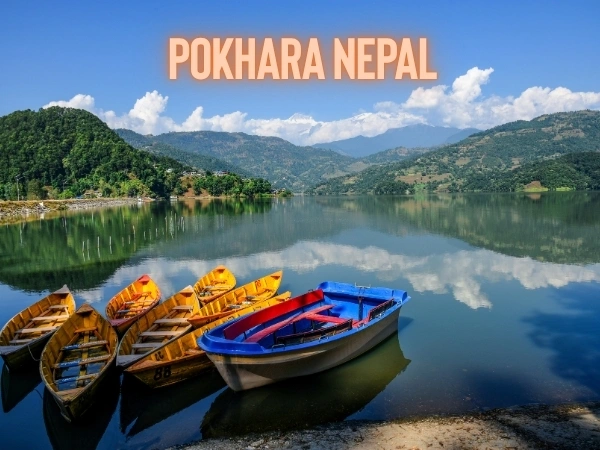
Arriving in Pokhara, the evening is yours. Fewa Lake at sunset with Machhapuchhre reflected in the water is one of those simple travel moments that stays with you. It is a peaceful way to settle in before the serious trekking begins.
Meals: Breakfast
Day 3: Fly Pokhara to Jomsom, Trek to Kagbeni (2,800 meters)
Early flights are the firm rule for Jomsom. The winds in the Kali Gandaki Valley build rapidly after mid-morning, and the small aircraft operating this route cannot safely handle them. So you are up before sunrise, boarding a plane that cuts directly between Annapurna and Dhaulagiri. The 25-minute flight delivers some of the most dramatic aerial views available anywhere in Nepal.
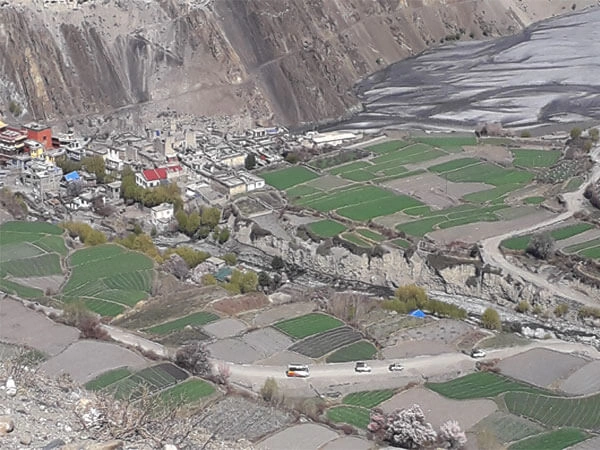
From Jomsom, the actual trekking begins. The trail follows the Kali Gandaki River north toward Kagbeni, the official gateway village to Upper Mustang. Kagbeni feels genuinely medieval. Narrow stone alleys, ancient chortens, whitewashed houses, and a checkpoint where rangers verify your restricted area permit before allowing you to continue north. This checkpoint marks the real beginning of the upper mustang trekking route.
Distance: 10 km | Duration: 3 to 4 hours | Meals: Breakfast, Lunch, Dinner
Day 4: Kagbeni to Chele (3,055 meters)
This leg moves you away from the Kali Gandaki and into the drier, more exposed terrain that defines the upper mustang travel route guide experience. You pass through Tangbe first, a quiet village where whitewashed houses line narrow lanes between buckwheat and barley fields. Then Chhusang, where an enormous boulder has fallen from the cliffs to create a natural tunnel over the river.
After Chhusang, the trail climbs steeply to Chele. The ascent is the hardest physical effort of the day but the views opening up behind you as you climb make it worth the effort. Chele sits at 3,055 meters and the teahouses here are basic but warm and welcoming.
Distance: 13 km | Duration: 5 to 6 hours | Meals: Breakfast, Lunch, Dinner
Day 5: Chele to Syangboche (3,800 meters)
One of the more demanding days on the mustang trekking schedule. The trail climbs to the Taklam La pass at 3,624 meters and then the Dajori La pass at 3,735 meters, with Samar village as a rest stop between the two ascents. Samar sits in a sheltered valley and the contrast between its green surroundings and the arid landscape above feels almost deliberate.
If you have energy after arriving at Samar, the detour to Chungsi Cave is worth every step. This sacred pilgrimage site, where Guru Rinpoche is said to have meditated, is carved into a vertical cliffside and doesn't feel real until you're standing directly in front of it. The cave complex is one of those places on the jomsom to lo manthang trek itinerary that stops most trekkers completely.
Distance: 11 to 12 km | Duration: 6 to 7 hours | Maximum altitude: 3,930 meters | Meals: Breakfast, Lunch, Dinner
Day 6: Syangboche to Ghami (3,520 meters)
Another full day on the mustang trekking schedule, crossing the Yamda La at 3,850 meters and the Nyi La pass at 4,010 meters. The Nyi La is a consistent highlight of the route. The 360-degree views of the Annapurna and Dhaulagiri ranges with the stark, colorful cliffs of Mustang in the foreground is one of the finest panoramas available anywhere on the upper mustang trek route.
Arriving in Ghami, you encounter the longest Mani wall in Mustang stretching across the valley floor. Hundreds of meters of stone, each piece carved with Buddhist mantras. Most trekkers stop and walk alongside it for a while rather than simply passing by. It has that effect.
Distance: 9 to 11 km | Duration: 5 to 6 hours | Meals: Breakfast, Lunch, Dinner
Day 7: Ghami to Charang (3,580 meters)
Leaving Ghami, the trail crosses a suspension bridge and follows the Mani wall before climbing to the Choya La pass at 3,870 meters. Charang, also called Tsarang, sits dramatically at the edge of the Charang Chu canyon. Two structures dominate the skyline here: the five-story White Palace, now operating as a museum, and the 14th-century Red Gompa famous for its Medicine Buddha frescoes.
Spend the afternoon wandering the alleys of Charang rather than rushing to the teahouse. There is no reason to hurry here and the village rewards slow, attentive exploration.
Distance: 10.7 to 11.5 km | Duration: 4 to 6 hours | Meals: Breakfast, Lunch, Dinner
Day 8: Charang to Lo Manthang (3,810 meters)
The final push to Lo Manthang is the most anticipated day of the entire lo manthang itinerary plan. The trail ascends through Lo-Gekar Gompa, one of the oldest monasteries in the entire Himalayan region and considered older than the famous Samye Gompa in Tibet, before making a final descent across an open plateau to the walled city.
Crossing that plateau and seeing Lo Manthang for the first time is one of those trekking moments that genuinely stays with you. A city enclosed by mud walls six meters high. A single gateway. Open plains surrounding it on all sides. It really does feel like arriving somewhere from a completely different century.
Distance: 10 to 11 km | Duration: 4 to 5 hours | Meals: Breakfast, Lunch, Dinner
Day 9: Exploring Lo Manthang (3,810 meters)
A full exploration day and easily one of the strongest highlights of the complete upper mustang trek itinerary. Lo Manthang contains four major temples: Jampa Gompa, the oldest and sometimes called God's House; Thubchen Gompa; Chodey Gompa; and Choprang Gompa, also known as New Gompa. Each holds centuries-old murals, thangka paintings, and sacred artifacts.
A roughly two-hour hike to Namgyal Gompa delivers sweeping views of the entire walled city from above, a perspective that makes the mandala-based urban design of the medieval capital immediately visible. The exploration of Tingkha, the last village of Lo Manthang, rounds out the day.
Nepal only opened Upper Mustang to foreign visitors in 1992. Even today, tourism remains deliberately limited. Walking these streets still carries a quality of genuine privilege that more heavily visited destinations cannot offer.
Altitude: 3,810 meters | Meals: Breakfast, Lunch, Dinner
Day 10: Lo Manthang to Ghami via Ghar Gumba (3,520 meters)
The return journey south begins, following a different route through Dhakarjung and Ghar Gumba, also called Lo Gekhar Monastery. This is one of the oldest Tibetan Buddhist monasteries in existence, dating to the 8th century. The wall paintings inside are extraordinary even by the standards of a region that has significant competition in that category.
From the Mui La pass at 4,170 meters, you get a final view back toward the plain of aspiration before descending to Ghami. Most trekkers stop at the pass for longer than they plan to.
Duration: 6 to 7 hours | Maximum altitude: 4,170 meters | Meals: Breakfast, Lunch, Dinner
Day 11: Ghami to Samar (3,330 meters)
Retracing sections of the route back through the Nyi La and Yamdo La passes, this day revisits landscapes you crossed on the way north but somehow they look different heading south. The light is different, your familiarity with the terrain gives you space to notice things you missed on the ascent, and Samar surrounded by poplar trees feels like a genuine green oasis after days of high desert terrain.
Distance: 13.2 to 14 km | Duration: 5 to 6 hours | Meals: Breakfast, Lunch, Dinner
Day 12: Samar to Chhusang (2,980 meters)
The Dajori La and Taklam La passes make their final appearance on this leg, descending through Chele and past the ancient sky caves carved high into the red organ-pipe cliffs above the Kali Gandaki. These cave systems are visible from the trail and the scale of them becomes more apparent from below than it does when you first pass them heading north.
Chhusang welcomes you back with apple orchards and a warmer, more settled feel compared to the exposed high-altitude landscape of the upper route.
Distance: 10 to 12 km | Duration: 6 to 7 hours | Meals: Breakfast, Lunch, Dinner
Day 13: Chhusang to Muktinath (3,760 meters)
Following the stream out of Chhusang, the trail climbs steadily toward the Gyu La pass at 4,077 meters. Near the pass, Shaligram fossil stones appear in the riverbed and along the trail. These ancient ammonite fossils are considered sacred manifestations of Vishnu in Hindu tradition and sacred objects in Buddhist practice as well. The shaligram pilgrimage to this area has been ongoing for centuries.
The views from the approach to Gyu La stretch 140 degrees across the Annapurna, Dhaulagiri, and Tukuche ranges. Muktinath at 3,760 meters is one of the most significant pilgrimage sites in the entire Himalayan region for both Hindus and Buddhists. Arriving here feels like a fitting near-conclusion to the journey.
Distance: 15 to 16 km | Duration: 6 to 7 hours | Meals: Breakfast, Lunch, Dinner
Day 14: Muktinath to Jomsom (2,720 meters)
The morning begins at Muktinath Temple itself. The temple complex features 108 sacred water spouts and an eternal flame, and even trekkers without specific religious interest tend to find the atmosphere genuinely moving after 13 days on the route.
After exploring the temple and nearby monastery, the trail descends through Jharkot, home to a Tibetan herbal medicine center and an ancient fortress, before following the Kali Gandaki valley all the way back to Jomsom. The views of Kagbeni from the elevated sections of the descent, with Dhaulagiri dominating the northwestern horizon, bring the geography of the whole trek into focus.
Distance: 20 to 22 km | Duration: 6 to 7 hours | Meals: Breakfast, Lunch, Dinner
Day 15: Fly Jomsom to Pokhara (820 meters)
Early morning flight, 25 minutes, back over those views you first experienced 12 days ago. The afternoon in Pokhara is entirely yours. Rest, eat well, sit by Fewa Lake, or simply let the past two weeks settle properly.
Meals: Breakfast
Day 16: Pokhara to Kathmandu, Departure
Tourist bus back along the Marsyangdi and Trishuli rivers, approximately 200 kilometers, six to seven hours. A domestic flight is available if you prefer to avoid the drive. Either way, your upper mustang trek itinerary from Kathmandu concludes back where it started, though you will be meaningfully different from the person who arrived at the airport on day one.
Meals: Breakfast
Upper Mustang Trek Itinerary at a Glance
| Day |
Route |
Altitude |
Distance |
Duration |
| 1 |
Arrive Kathmandu |
1,400 m |
|
|
| 2 |
Kathmandu to Pokhara by bus |
820 m |
200 km |
6 to 7 hrs |
| 3 |
Fly Pokhara to Jomsom, trek to Kagbeni |
2,800 m |
10 km |
3 to 4 hrs |
| 4 |
Kagbeni to Chele |
3,055 m |
13 km |
5 to 6 hrs |
| 5 |
Chele to Syangboche |
3,800 m |
11 to 12 km |
6 to 7 hrs |
| 6 |
Syangboche to Ghami |
3,520 m |
9 to 11 km |
5 to 6 hrs |
| 7 |
Ghami to Charang |
3,580 m |
10.7 to 11.5 km |
4 to 6 hrs |
| 8 |
Charang to Lo Manthang |
3,810 m |
10 to 11 km |
4 to 5 hrs |
| 9 |
Explore Lo Manthang |
3,810 m |
|
Full day |
| 10 |
Lo Manthang to Ghami via Ghar Gumba |
3,520 m |
|
6 to 7 hrs |
| 11 |
Ghami to Samar |
3,330 m |
13.2 to 14 km |
5 to 6 hrs |
| 12 |
Samar to Chhusang |
2,980 m |
10 to 12 km |
6 to 7 hrs |
| 13 |
Chhusang to Muktinath |
3,760 m |
15 to 16 km |
6 to 7 hrs |
| 14 |
Muktinath to Jomsom |
2,720 m |
20 to 22 km |
6 to 7 hrs |
| 15 |
Fly Jomsom to Pokhara |
820 m |
|
25 min flight |
| 16 |
Pokhara to Kathmandu, departure |
1,400 m |
200 km |
6 to 7 hrs |
Upper Mustang Trek Itinerary Cost Breakdown 2026
Understanding the detailed upper mustang trek itinerary cost upfront prevents budget surprises later. Here is the realistic 2026 breakdown.
| Cost Component |
Estimated Cost (USD) |
Notes |
| Restricted Area Permit (10 days) |
$500 |
$50 per person per day from 2026 |
| ACAP Permit |
$30 |
No time limit once issued |
| TIMS Card |
$20 |
Recommended for overland route |
| Jomsom flights round trip |
$250 to $300 |
Book well in advance |
| Guide fees |
$25 to $40 per day |
Licensed government guide required |
| Porter fees |
$20 to $30 per day |
Optional but recommended |
| Teahouse accommodation |
$10 to $20 per night |
Basic to comfortable |
| Meals on trek |
$15 to $25 per day |
Standard teahouse menu |
| Affordable package with agency |
$1,800 to $2,500 |
Mid-range, all-inclusive |
| Luxury upper mustang trek itinerary |
$3,000 to $4,500 |
Private vehicle, upgraded accommodation |
The mid-range guided upper mustang trek itinerary packages from Index Adventure represent the best value for most trekkers. They include all permits, licensed guide, porter service, meals on trek, teahouse accommodation, Jomsom flights, and ground transportation between Kathmandu and Pokhara. The price difference between a well-run mid-range package and a luxury option comes down primarily to hotel quality in Kathmandu and Pokhara rather than any difference in the quality of the trek itself.
Shorter Upper Mustang Itinerary Options
Not everyone has 16 days available. Here is how the shorter upper mustang trek itinerary options work in practice.
Upper Mustang trek itinerary 5 days: Covers only the Jomsom to Kagbeni section with limited movement into the restricted zone. You get a taste of the lower mustang trekking route but miss Lo Manthang entirely. Not recommended for anyone making the trip specifically to experience the Kingdom of Lo.
Upper Mustang trek itinerary 7 days: Possible with jeep assistance for certain sections between villages. You can reach Lo Manthang and spend one night there before returning. The experience is compressed and the acclimatization is more stressful. Best for trekkers who have already done the full route and are returning specifically for Lo Manthang.
Upper Mustang trek itinerary 10 days: The full jomsom to lo manthang detailed itinerary is achievable in 10 days of trekking. This is a genuinely good option for experienced Himalayan trekkers who are confident about their fitness and altitude management. You get the complete route without the 14-day timeframe. Index Adventure can customize this structure for the right client.
Best Time for Your Upper Mustang Trek Itinerary Plan
Upper Mustang is genuinely a year-round destination, which is one of its most practically useful characteristics for trip planning. The rain shadow climate keeps it dry even during Nepal's monsoon season, which is when most other Himalayan trekking routes become difficult or unsafe.
| Season |
Months |
Conditions |
Recommendation |
| Spring |
March to May |
Mild temperatures, clear skies, rhododendrons at lower elevations |
Best overall |
| Summer/Monsoon |
June to September |
Warm and dry in Mustang while rest of Nepal is wet |
Excellent, fewer crowds |
| Autumn |
October to November |
Stable weather, exceptional visibility, peak season |
Best overall |
| Winter |
December to February |
Cold, possible snowfall on high passes, some teahouses close |
Experienced trekkers only |
The best time based upper mustang itinerary plan for most first-time trekkers centers on spring from March through May or autumn from October through November. Spring adds the bonus of the Tiji Festival in Lo Manthang during May, which is worth planning around specifically if your dates allow it.
The summer months from June through September are genuinely underrated for the upper mustang trekking route. The rest of Nepal deals with monsoon disruption while Mustang remains dry and relatively uncrowded. Some of the most atmospheric photography happens during monsoon season when dramatic clouds frame the desert landscape without bringing rain.
Is Upper Mustang Trek Easy for Beginners?
This question comes up frequently when trekkers are in the early planning stages of their mustang trek itinerary.
The honest answer is yes, with appropriate preparation and realistic expectations. The upper mustang trek route is not technically demanding in the mountaineering sense. There is no glacier travel, no roped sections, and no serious technical terrain. But it consistently involves daily trekking of 5 to 7 hours at elevations between 3,000 and 4,200 meters, often on dry, uneven, dusty trail surfaces in significant wind.
Practical preparation for beginners:
- Build cardio fitness consistently for at least 8 weeks before departure
- Complete at least one multi-day trek at moderate altitude before attempting Upper Mustang
- Follow the acclimatization schedule in the itinerary without trying to compress days
- Travel with a licensed guide who can monitor your altitude response professionally
- Book through a reputable agency like Index Adventure that builds proper rest days into the schedule
The guided upper mustang trek Nepal experience is significantly more accessible for first-timers than attempting to navigate the route independently, particularly given the restricted area permit requirements and the limited English signage in remote sections of the trail.
Permits Required for the Upper Mustang Trek Itinerary in 2026
Every trekker planning any version of the upper mustang trek itinerary Nepal needs to understand the permit requirements before booking anything else.
Three permits are required:
Restricted Area Permit (RAP): The permit that grants access to Upper Mustang beyond Kagbeni. As of 2026, pricing operates at $50 per person per day inside the restricted zone. A 10-day permit costs $500. This must be obtained through a registered trekking agency and cannot be arranged independently regardless of nationality.
ACAP Permit: The Annapurna Conservation Area Permit covering the broader region costs $30 per foreign national and has no time limit once issued.
TIMS Card: The Trekkers' Information Management System card costs $20 and is recommended for trekkers using the overland route into the region.
2026 solo trekker update: The previous requirement for a minimum group of two foreign nationals to obtain a single RAP was officially removed in March 2026. Individual trekkers can now apply for permits without a trekking partner. The licensed guide requirement remains in place. Index Adventure manages the complete permit application process for all clients, including the new online application system that launched in early 2026 with a processing time of 3 to 7 working days.
Why Choose Index Adventure for Your Upper Mustang Itinerary
Index Adventure is a Kathmandu-based, NTB and TAAN certified local trekking company with more than two decades of operational experience specifically in Upper Mustang. The company maintains a physical office in Thamel where prospective clients can meet the team, review documentation, and have detailed conversations about the itinerary before committing to any booking.
All guides assigned to the upper mustang trek route are government-licensed, English-speaking, and carry experience measured in seasons on this specific trail rather than general Himalayan experience. That distinction matters in a region where checkpoint procedures, teahouse relationships, and knowledge of alternative routes in bad weather conditions is genuinely consequential.
Whether you want to join an upper mustang trek itinerary group departure, customize your own private schedule, or build a completely new itinerary around specific interests like the Tiji Festival or the Shaligram pilgrimage sites, the planning process starts with a direct conversation. Transparent pricing, no hidden fees, and permit handling managed end to end are the baseline expectations for every booking.
Frequently Asked Questions About Upper Mustang Trek Itinerary
How long is the Upper Mustang trek itinerary?
The full trek including Kathmandu arrival and departure runs 14 to 16 days. The actual trekking portion from Jomsom to Lo Manthang and back is roughly 12 days. Shorter upper mustang trek itinerary 10 days and upper mustang trek itinerary 7 days options are available for trekkers with time constraints.
What is the best route for the Upper Mustang trek?
The jomsom to lo manthang detailed itinerary is the standard and best-documented route. Most trekkers fly into Jomsom, trek north to Lo Manthang over 5 to 6 days, spend one to two days exploring the walled city, and return via a slightly different route through Ghar Gumba and Lo Gekhar Monastery.
Can beginners follow the Upper Mustang itinerary?
Yes, with proper preparation. The terrain is not technically demanding but daily distances, altitude, and wind exposure require reasonable cardiovascular fitness. A guided upper mustang trek Nepal significantly reduces the difficulty for first-timers by managing acclimatization, permits, and logistics professionally.
What is the Manang Mustang itinerary?
Some trekkers combine the Annapurna Circuit through Manang with the upper mustang trekking route, entering Mustang from Thorong La or via a connector trail. This is a longer, more demanding annapurna conservation area trek plan that appeals to trekkers who want the full Annapurna region experience within a single journey. Index Adventure can build custom manang mustang itinerary route options on request.
How much does the Upper Mustang trek itinerary cost?
The detailed upper mustang trek itinerary with cost runs approximately $1,800 to $2,500 for a mid-range all-inclusive agency package. Luxury upper mustang trek itinerary options with upgraded accommodation run $3,000 to $4,500. Permit costs alone total approximately $550 for a 10-day visit including RAP, ACAP, and TIMS.
What is the upper mustang trek itinerary 10 days option?
The 10-day version covers the full jomsom to lo manthang trek itinerary without the Kathmandu and Pokhara extension days. It works best for trekkers who have already spent time acclimatizing in Nepal and are experienced enough to manage the pace without the buffer days built into the 14-day version.
How do I book an upper mustang trek itinerary?
Contact Index Adventure directly through the office in Thamel, Kathmandu. The team will discuss your fitness level, available dates, budget, and specific interests before recommending the most appropriate itinerary structure. All permit applications, guide assignments, teahouse bookings, and transportation arrangements are handled as part of the booking process. No deposit is required to begin planning conversations.